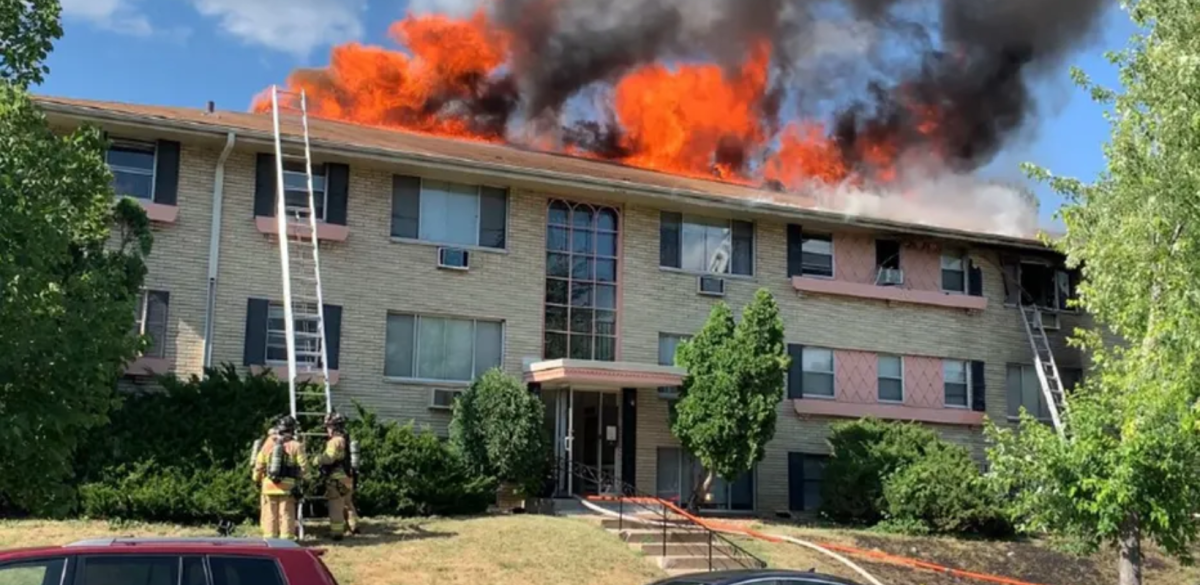

Residential fires happen fast and leave renters facing serious financial loss. In Illinois, apartment fires, kitchen accidents, electrical malfunctions, and other emergencies can destroy your belongings and make a rental temporarily unlivable. Knowing what renters insurance covers before a fire happens helps you recover faster and avoid costly surprises.
The risk is real. According to the Illinois State Fire Marshall, there were 17,256 structure fires reported in 2025, resulting in over $1.4 billion in property damage. Fire claims also occur at higher rates in apartments and condos than in single-family rentals, because a fire in one unit can spread to the units next to it. That makes coverage especially important for Illinois renters living in multi-unit buildings.
Despite the risk, many renters either skip insurance or misunderstand what it covers. The good news: renters’ insurance does typically cover fire damage. But there are limits, exclusions, and policy details every renter should understand before disaster strikes.
This article is general information, not insurance advice. Coverage varies by policy, so confirm the specifics with your insurer or agent. For a neutral overview of renters coverage in Illinois, the Illinois Department of Insurance publishes a consumer guide on renters insurance.
Quick Answer: Does Renters Insurance Cover Fire Damage in Illinois?
Yes. In most cases, renters insurance in Illinois covers fire damage caused by a sudden and accidental covered event. A standard policy typically pays for damaged personal belongings, smoke and soot damage, and additional living expenses if your rental becomes temporarily uninhabitable.
What it does not cover is the building itself, intentional acts, or losses beyond your policy limits. The landlord’s insurance is responsible for repairing the physical structure.
Understanding Renter’s Insurance Coverage in Illinois
Most renters insurance policies in Illinois are HO-4 policies designed specifically for tenants. They generally include:
- Personal property coverage
- Personal liability protection
- Additional Living Expenses (ALE), also called Loss of Use coverage
- Medical payments coverage in certain situations
Illinois law does not require renters to buy renters insurance. However, many Chicago and suburban landlords make it a condition of the lease, and failing to show proof of coverage can lead to penalties or lease termination. Even when it is optional, the math favors carrying it: your landlord’s policy covers the building and nothing you own.
What Fire Damage Does Renters Insurance Cover in Illinois?
Personal Property Coverage
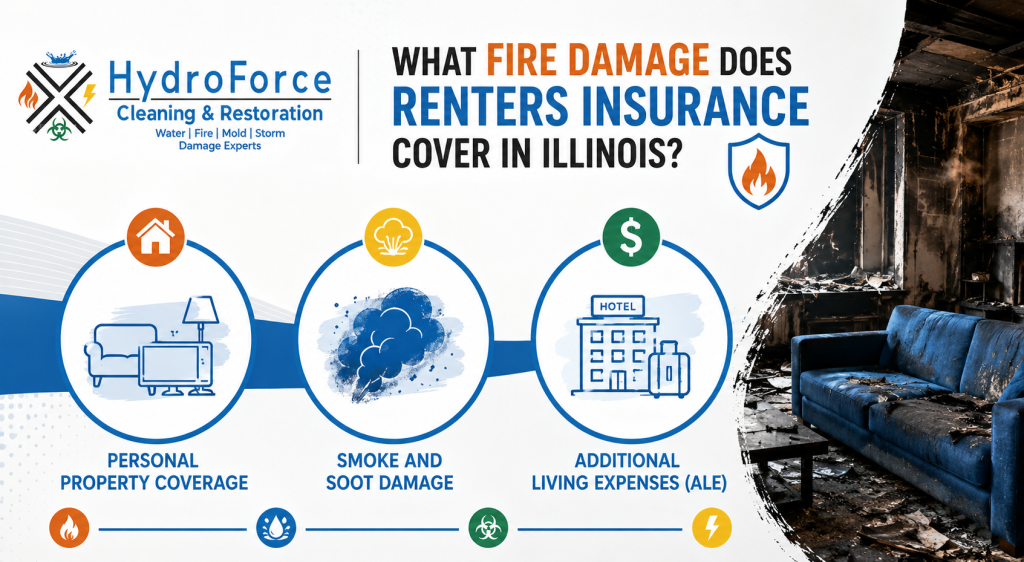
One of the biggest benefits of renters insurance is protection for your personal belongings. If a covered fire damages or destroys your possessions, your insurer may reimburse you up to your policy limits after your deductible is met.
Commonly covered belongings include:
- Furniture
- Clothing
- Electronics
- Kitchenware
- Home décor
- Books
- Small appliances
- Personal items
Coverage is based on one of two methods:
- Replacement Cost Value (RCV): Pays the cost to replace damaged items with comparable new ones.
- Actual Cash Value (ACV): Pays the depreciated value based on age and condition.
One detail that catches renters off guard: sublimits. High-value items such as jewelry, watches, firearms, art, and collectibles usually have a per-category cap, often $1,000 to $2,500. If the replacement cost exceeds that sublimit, you only recover the capped amount unless you have added scheduled personal property coverage for those items. If you own anything with significant value, ask your agent about a rider before a fire happens.
Smoke and Soot Damage
Fire damage extends beyond visible flames. Left on surfaces for even 24 to 48 hours, it etches glass, corrodes metal fixtures, and yellows painted walls permanently. Smoke also travels through the HVAC system and settles inside the ductwork, which is why a surface wipe-down is never enough to remove the odor. Proper restoration means sealing the system, cleaning the ducts, and using hydroxyl or ozone treatment to pull odor out of drywall and subfloor before it sets in for good.
Smoke and soot can spread throughout a rental property and damage:
- Clothing and fabrics
- Upholstered furniture
- Electronics
- Artwork and photographs
- Documents
- HVAC systems through circulating particles
The takeaway for your claim: Smoke and soot damage is typically covered under the same personal property coverage that applies to fire, but the cleanup is specialized work, not a weekend project.
Additional Living Expenses (ALE)
If your rental home cannot be safely occupied after a covered fire, Additional Living Expenses coverage may reimburse reasonable extra costs incurred while repairs are underway, including:
- Hotel accommodations
- Temporary rental housing
- Restaurant meals when you cannot cook
- Laundry expenses
- Increased transportation costs in certain situations
ALE coverage helps maintain your normal standard of living while your residence is being restored.
Water Damage From Firefighting Efforts
This is a coverage point many renters miss. When the fire department puts out a fire, the water from hoses and sprinklers often causes as much damage as the flames. That water damage is typically covered because it is a direct result of a covered fire. The same goes for water from a sprinkler system that activates during the fire. In practice, fire restoration and water damage mitigation almost always happen together, and both can fall under your claim.
Does Renters Insurance Cover a Fire I Accidentally Caused?
Yes. If you accidentally start a fire, the personal liability portion of your renters policy can pay for damage to your landlord’s property and to neighboring units, up to your liability limit.
For example, if a kitchen fire spreads to the apartment next door, or if it triggers the sprinklers in a shared hallway, liability coverage can pay those repair costs so you are not paying out of pocket. This matters in Illinois apartment buildings, where a single accidental fire can affect several units at once.
Standard policies often include $100,000 in liability coverage, but many renters carry $300,000 or more for better protection. Liability does not apply to fires that are set intentionally or caused by gross negligence.
What Fire Damage Is Not Covered by Renters Insurance?
Renters insurance is broad, but it does not cover every fire-related loss. Knowing the exclusions helps you avoid surprises at claim time.
- Damage to the building structure: Renter’s insurance does not cover the physical structure of the rental property, including the roof, walls, floors, or other structural components. These are the responsibility of the landlord’s insurance policy.
- Intentional or preventable fires: Most policies exclude coverage for fires that are intentionally set (such as arson) or caused by gross negligence or reckless behavior. Coverage is intended for sudden and accidental events, not deliberate or avoidable damage.
- Policy deductible requirements: Even when a fire loss is covered, you are responsible for paying your deductible before insurance benefits apply. The insurer will then reimburse covered losses up to your policy’s personal property limits.
- High-value items above sublimits: Jewelry, art, and collectables may only be partially covered without a rider.
- Business-related property losses: Personal renter’s insurance policies typically do not cover business equipment, inventory, or other commercial property kept in the rental unit. If you operate a business from home, you may need additional or specialized coverage.
Does Renters Insurance Cover Smoke Damage After a Fire?
Yes, in most cases renters insurance covers smoke damage after a fire, as long as the fire itself is a covered peril. Smoke damage is usually included under the same personal property coverage that applies to fire damage.
Smoke can be as destructive as flames. Even when items are not directly burned, smoke particles seep into fabrics and porous materials, leaving odors and residue that are difficult to remove. Smoke damage may also trigger your ALE coverage: if heavy smoke makes the unit unsafe to live in, your policy may help pay for temporary housing while the property is cleaned and restored.
Coverage depends on your specific policy. Gradual damage, poor maintenance, or excluded perils may not be covered, so review your plan details.
How Much Does Renters Insurance Cost in Illinois, and Is It Required?
Renters insurance in Illinois is one of the most affordable coverages you can buy, often around $15 to $20 per month, depending on your location, coverage limits, and deductible. Rates in Chicago tend to sit near the lower end because of the volume of policies written there.
No Illinois state law requires renters’ insurance. But many landlords and property management companies, especially in Chicago and the suburbs, require it in the lease. Compared with the cost of replacing everything you own after a fire, a policy of $15 to $20 per month is inexpensive protection.
Who Pays for Fire Damage at an Illinois Rental Property?
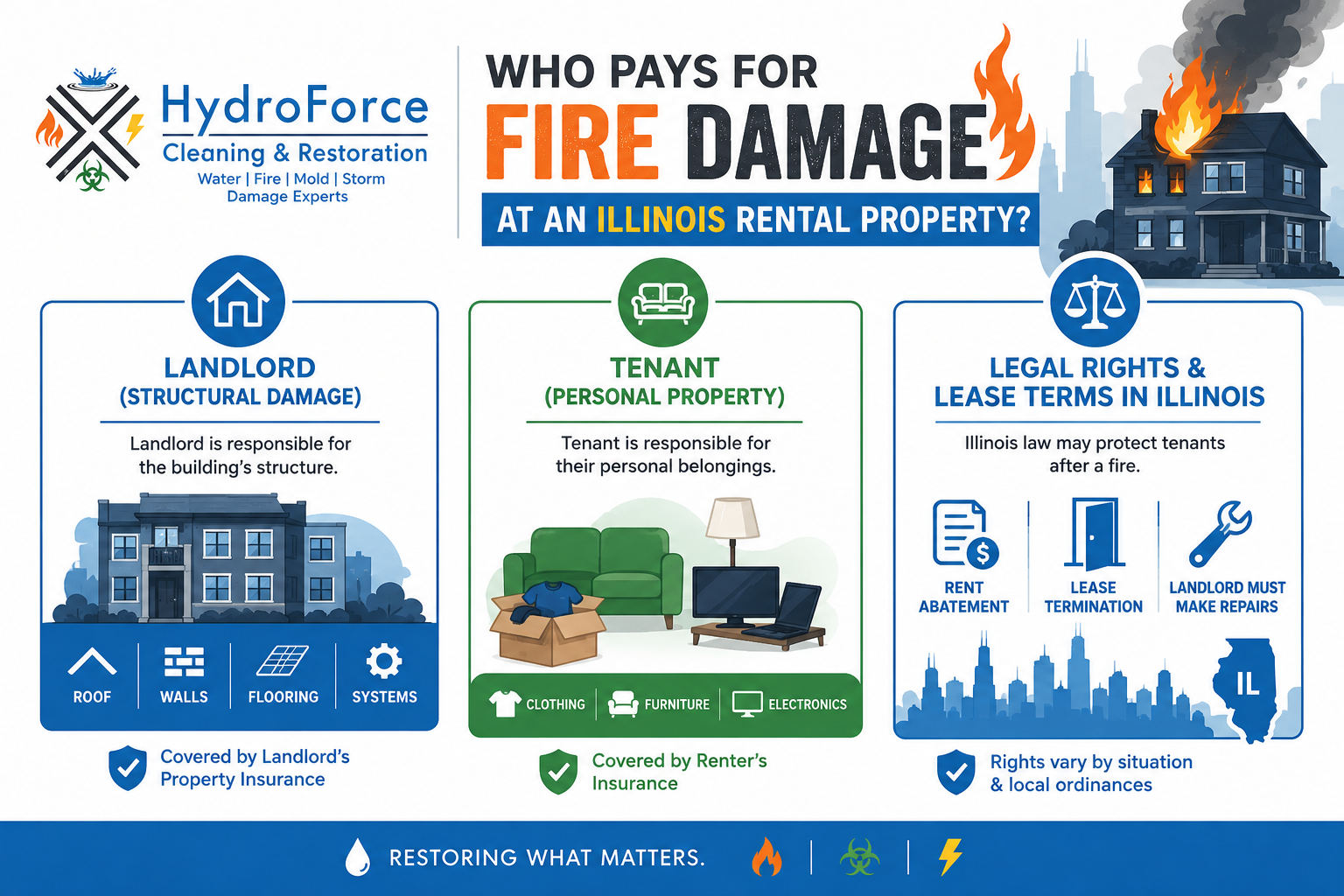
After a fire in a rental property, responsibility for costs is typically shared between the landlord and the tenant’s insurance policies, depending on what was damaged and how the fire occurred. Understanding this distinction is key to knowing what to expect during the recovery process.
- Landlord (structural damage): The landlord is generally responsible for repairing or restoring the physical structure of the building, including the roof, walls, flooring, and essential building systems. This coverage is typically handled through the landlord’s property insurance policy.
- Tenant (personal property): A standard renter’s insurance policy covers a tenant’s personal belongings in the event of an accidental fire or related damage, such as smoke damage. This includes items like clothing, furniture, and electronics, up to the limits of the policy.
- Legal rights and lease terms in Illinois: Illinois law and local ordinances, such as the Chicago Residential Landlord and Tenant Ordinance (RLTO), may apply after a fire. If a unit becomes uninhabitable, tenants may have rights such as rent abatement or lease termination, while landlords are generally required to make necessary repairs within a reasonable timeframe.
Common Causes of Apartment and Rental Home Fires in Illinois
Fires in rental properties are unfortunately common across Illinois, often caused by everyday household activities or preventable hazards. Understanding the most frequent causes can help tenants reduce their risk.
- Cooking-related incidents are the leading cause of residential fires, often due to unattended stoves or grease fires.
- Space heaters placed too close to flammable materials or left running unattended can quickly ignite nearby objects.
- Electrical issues, such as overloaded outlets, damaged wiring, or faulty appliances, are another common source of fire.
- Candles left burning unattended and smoking indoors also contribute significantly to fire risk in rental homes.
What Should You Do After a Fire in Your Apartment or Rental Home?
Acting quickly protects your safety and strengthens your insurance claim. The U.S. Fire Administration provides a guide for property owners covering what to do after a fire.
- Get to safety and call emergency services from outside the property.
- Notify your insurance company as soon as possible to start the claim.
- Document the damage thoroughly with photos and videos of both fire and smoke-affected areas.
- Arrange temporary housing, whether with family, friends, or a hotel.
How to File a Renters Insurance Fire Claim in Illinois
Filing a claim after a fire involves several steps to make sure your losses are documented and reimbursed.
- Take detailed photos and videos of all damaged property before anything is moved or discarded.
- Contact your insurance provider promptly to report the fire and open your claim.
- If it is safe, take reasonable steps to prevent further damage, but always follow the fire department instructions first.
- Keep all receipts for temporary living expenses, including hotels, meals, and transportation, since these may be reimbursable under ALE.
- Work with qualified fire damage restoration professionals to assess, clean, and restore your property. A restoration company that documents conditions for your adjuster can help support your claim.
How Fire Damage Restoration Helps After an Insurance Claim
Professional fire damage restoration services play a critical role in returning your rental unit to a safe and livable condition after a fire. These specialists use advanced equipment and techniques to address both visible and hidden damage.
- Smoke odor removal using specialized equipment and deodorization methods to restore indoor air quality.
- Soot cleanup and surface restoration to prevent long-term staining and corrosion of affected materials.
- Water damage mitigation and drying services, since firefighting efforts often leave behind significant water exposure.
- Structural repair and full property restoration to rebuild damaged areas and return the unit to its pre-loss condition whenever possible.
Acting fast matters. The sooner soot and water are removed, the less permanent damage sets in, and the smoother your insurance claim tends to go.
Get Expert Insurance Claims Support After Fire Damage
A fire in a rental is a devastating event that disrupts every part of daily life. Renters insurance in Illinois provides essential financial protection, but understanding your coverage, limits, and responsibilities is just as important as having a policy.
Even with insurance, recovery goes beyond filing a claim. Smoke, soot, water, and structural contamination linger long after the fire is out, and acting quickly reduces long-term damage while supporting a smoother claims process.
If you are dealing with fire damage in your rental, HydroForce Cleaning & Restoration provides comprehensive fire damage restoration designed to help you recover quickly and safely. Our team handles smoke damage, soot cleanup, water mitigation, odor removal, and full structural restoration, and we document conditions to support your insurance claim. Call us at (630) 835-0862 for emergency fire damage restoration in Chicago and the surrounding suburbs.