
The most common fire hazards in Chicago homes are unattended cooking, space heaters and other heating equipment, overloaded outlets and outdated wiring, smoking materials, lithium-ion batteries, and clogged dryer vents. Chicago’s older housing stock, closely built multi-unit buildings, and long heating season raise the risk for several of these. Most can be reduced with simple maintenance and a few habit changes.
The 11 hazards below are ranked by how often they cause home fires nationally, based on National Fire Protection Association (NFPA) and U.S. Fire Administration (USFA) data. Each one includes the warning signs to watch for and the single most effective prevention step, whether you own a bungalow, rent a two-flat, or live in a high-rise condo in Chicago.
Why Are Chicago Homes at Higher Risk for House Fires?
Chicago homes face higher fire risk than many newer suburban homes because of their age, their construction, and the city’s long heating season. Four local factors matter most.
- Older wiring in bungalows, two-flats, and greystones: Many Chicago homes built before 1950 still have original knob-and-tube wiring, 60-amp electrical service, or only one or two outlets per room. Modern households run far more devices than these systems were designed for, which pushes residents toward power strips and extension cords that can overheat.
- Shared walls and wooden back porches: In two-flats, three-flats, and courtyard buildings, a fire that starts in one unit can spread to neighbors through shared walls, stairwells, and wooden rear porches. A fire that would stay contained in a detached house can displace several households in a Chicago multi-unit building.
- A five- to six-month heating season: Boilers, radiators, furnaces, fireplaces, and space heaters run from roughly October through April. Heating equipment is the second leading cause of U.S. home fires, and Chicago homes use it longer than most of the country.
- City smoke and carbon monoxide detector requirements: Chicago requires working smoke detectors and carbon monoxide detectors in residential buildings, and battery-powered smoke detectors must use 10-year sealed, tamper-resistant batteries. If your detectors are older than 10 years, replace them.
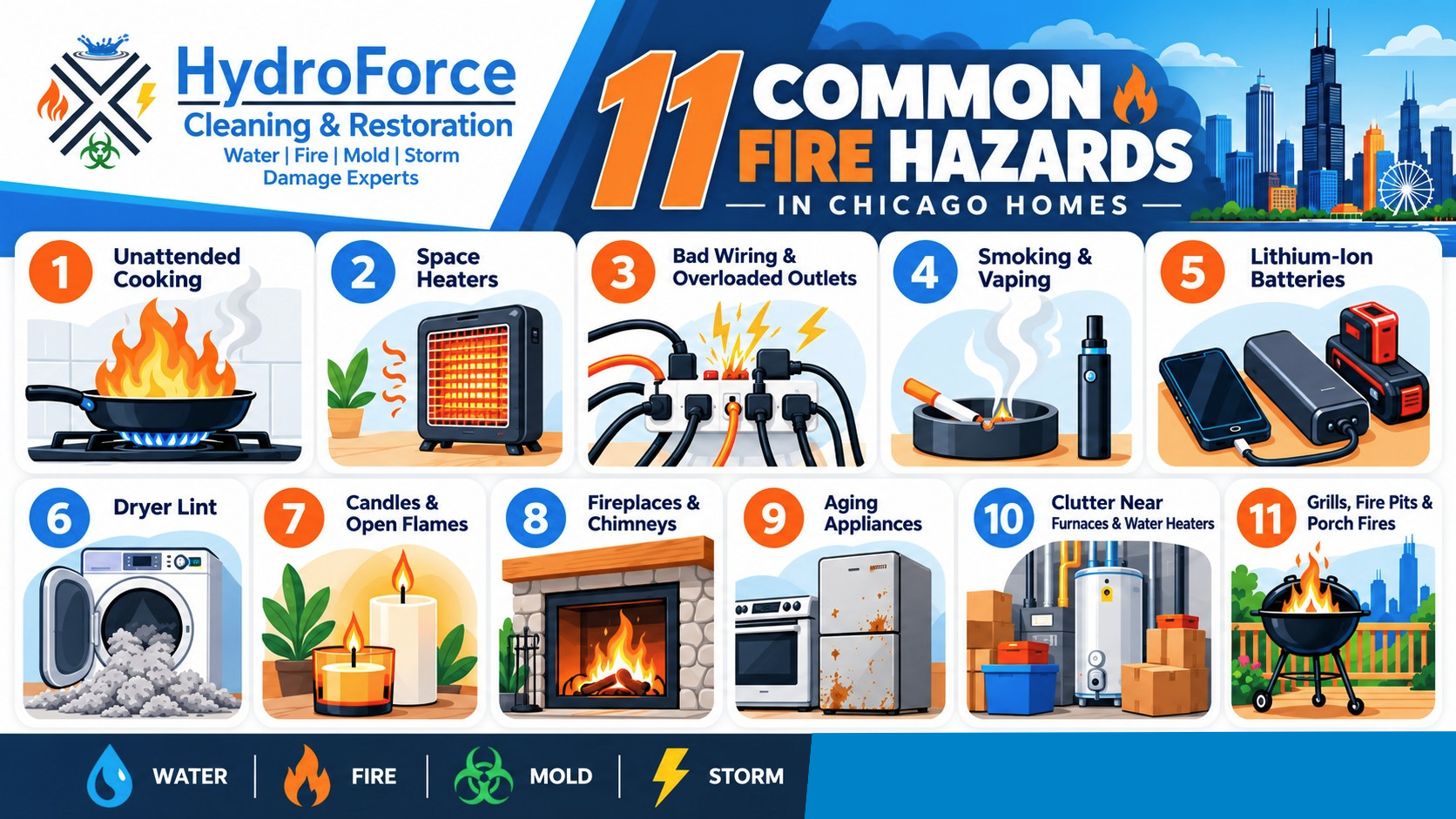
What Are the 11 Most Common Fire Hazards in Chicago Homes
Below are the most common fire hazards in Chicago homes, ranked by how often they cause residential fires, with warning signs and prevention steps for each.
1. Unattended Cooking
Cooking is the leading cause of home fires and home fire injuries in the United States, and unattended cooking is the top contributing factor according to the NFPA Home Cooking Fires report. Grease, cooking oil, dish towels, and paper products near the stovetop can turn a small flare-up into a kitchen fire within seconds.
Stay in the kitchen whenever you fry, sear, or broil. Keep towels, oven mitts, and packaging at least three feet from burners. If a grease fire starts, never use water. Turn off the heat, cover the pan with a metal lid, and leave it covered. If the fire spreads beyond the pan, get out and call 911.
Countertop appliances like air fryers, toaster ovens, and electric griddles also start kitchen fires. Unplug them when not in use and keep them clear of cabinets and curtains.
2. Space Heaters and Portable Heating Equipment
Space heaters are involved in 4 of 5 home heating fire deaths, usually because they sit too close to bedding, curtains, or upholstered furniture. Accounting for In Chicago, they are most common in drafty older units and basement rooms.
Keep three feet of clear space around every space heater. Plug it directly into a wall outlet, never an extension cord or power strip. Choose a model with automatic tip-over and overheat shutoff, and turn it off when you leave the room or go to sleep.
3. Overloaded Outlets, Damaged Cords, and Outdated Wiring
Electrical fires start when circuits, outlets, or cords carry more current than they are rated for, or when damaged insulation exposes wiring. This risk is higher in Chicago homes with original wiring or 60-amp service.
Warning signs include breakers that trip often, lights that flicker or dim when appliances start, outlets or switch plates that feel warm, buzzing or crackling sounds, and a burning plastic smell. Never daisy-chain power strips, never run cords under rugs, and replace frayed cords instead of taping them. If your home still has knob-and-tube wiring or you notice any warning sign, schedule an inspection with a licensed electrician.
4. Smoking and Vaping Materials
Smoking is the leading cause of home fire deaths in the United States [verify, NFPA Home Fires Started by Smoking report]. Cigarettes that are not fully extinguished can smolder in upholstery, mattresses, or trash for hours before flames appear.
If anyone smokes, do it outside and use deep, sturdy ashtrays placed on a stable surface. Soak butts and ashes in water before throwing them away. Never smoke in bed or when drowsy, and never smoke where medical oxygen is in use.
5. Lithium-Ion Batteries in E-Bikes, Scooters, and Chargers
Lithium-ion batteries can overheat and ignite when they are damaged, poorly made, or charged improperly. These fires burn hot, spread fast, and can reignite after they appear to be out. E-bikes and scooters stored in apartments, hallways, and basements are a growing concern in dense cities like Chicago. The Chicago Fire Department has reported a rise in lithium-battery-related fires, making it more important for property owners to understand the risks.
Buy devices and batteries certified by a recognized testing lab such as UL. Use only the manufacturer’s charger, charge on a hard surface away from anything flammable, and do not charge overnight or while you are away. Never store an e-bike or scooter where it blocks a door or stairway. Stop using any battery that swells, leaks, smells, or gets unusually hot.
6. Dryer Lint and Clogged Dryer Vents
Failure to clean the dryer is the leading cause of home clothes dryer fires. Lint is highly flammable, and a clogged vent traps heat inside the machine. Many Chicago basement laundry setups have long vent runs that clog faster.
Clean the lint filter after every load and have the full vent line cleaned at least once a year. Replace plastic or foil accordion ducts with rigid or semi-rigid metal duct. Warning signs of a clogged vent include clothes taking longer to dry, a dryer that is hot to the touch, and a burning smell.
7. Candles, Incense, and Other Open Flames
Candle fires peak in December, when holiday decorations sit close to open flames. Most candle fires start when a candle is left unattended or placed too close to curtains, bedding, or paper.
Keep candles at least 12 inches from anything that can burn, on a stable surface out of reach of children and pets. Blow them out before leaving the room or going to sleep. Flameless LED candles give the same look with no fire risk.
Read: What Is Ghosting on Walls and Ceilings? Causes and Fixes
8. Fireplaces, Wood Stoves, and Chimneys
Burning wood leaves creosote inside the chimney, and creosote buildup is the main cause of chimney fires. Many older Chicago homes also have chimney liners that have cracked or deteriorated with age.
Have your chimney inspected once a year before heating season and cleaned as needed. Burn only dry, seasoned hardwood, never trash, cardboard, or wrapping paper. Use a metal screen or glass doors, and let ashes cool for at least several days in a covered metal container before disposal.
9. Aging or Malfunctioning Appliances
Refrigerators, dishwashers, washers, dryers, and ovens can develop wiring or component failures as they age. Recalled appliances are a common hidden risk because many owners never receive the recall notice.
Watch for sparks, smoke, unusual noises, overheating, or an appliance that repeatedly trips a breaker. Unplug the appliance if it is safe to do so and have it repaired or replaced. Register major appliances with the manufacturer and check model numbers at SaferProducts.gov for recalls.
10. Clutter Near Furnaces, Boilers, and Water Heaters
Stored items placed against heat-producing equipment give a fire fuel and can block escape routes. In Chicago, basements and garages are the usual trouble spots, packed with cardboard boxes, seasonal decorations, paint, and cleaning supplies.
Keep at least three feet of clear space around furnaces, boilers, and water heaters. Store paint, gasoline, and solvents in their original containers away from pilot lights and never in living areas. Keep hallways, stairs, and basement exits clear so everyone can get out quickly.
11. Grills, Fire Pits, and Porch Fires
Grills and fire pits cause fires when they are used too close to homes, garages, decks, or fences. Chicago’s wooden back porches add risk in multi-unit buildings, where a grill fire on one porch can spread to the units above.
Keep grills and fire pits at least 10 feet from structures, and never use a grill inside a garage, even with the door open. Check current Chicago fire code rules before grilling on a porch or balcony in a multi-unit building. Let charcoal and ashes cool completely and dispose of them in a metal container.
What Fire Hazards Increase in Chicago Winters and Summers?
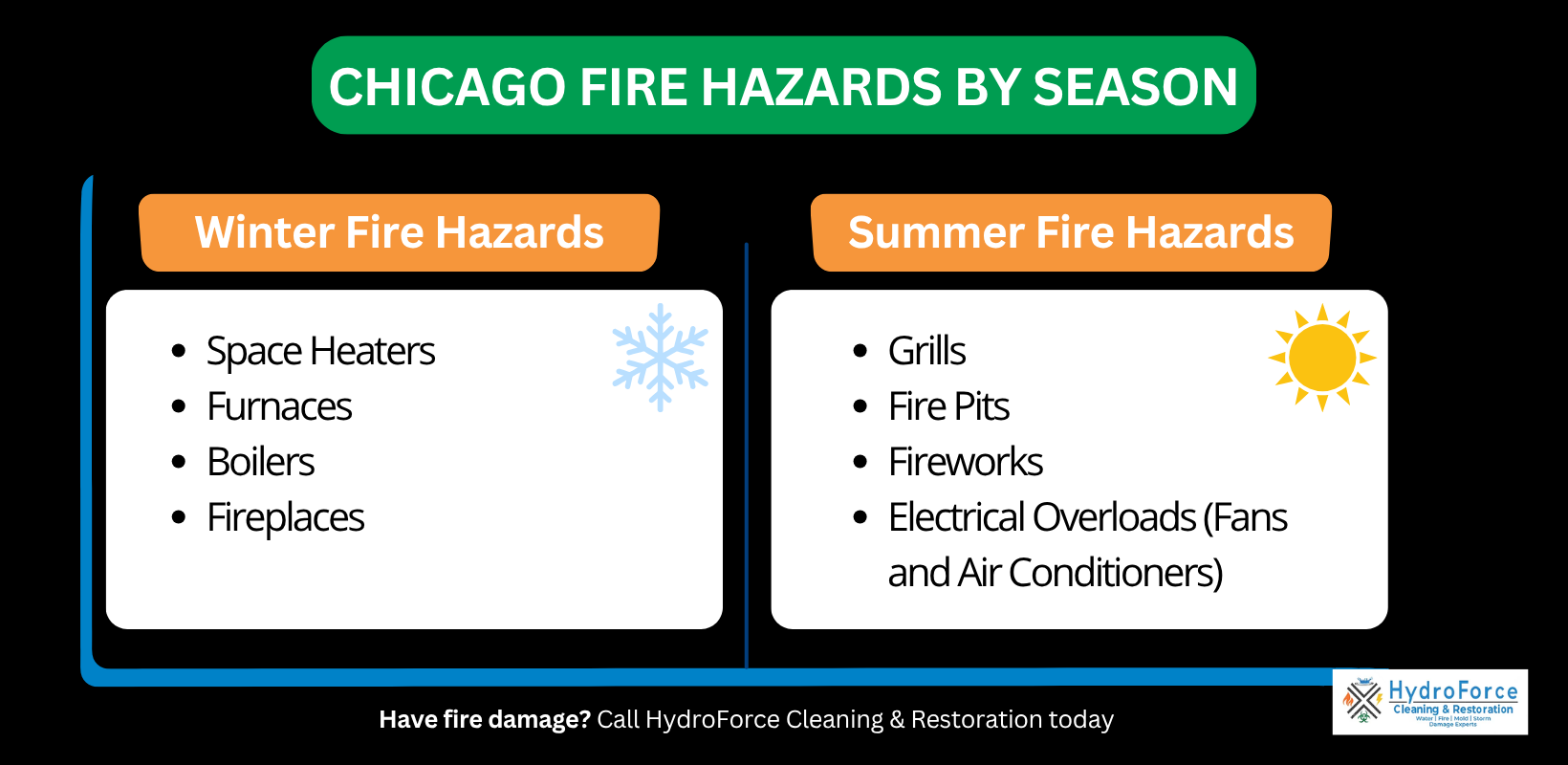
Chicago fire risk shifts with the seasons: heating equipment and holiday decorations drive winter fires, while grills, fire pits, and overworked air conditioners drive summer fires.
Winter Fire Hazards in Chicago
Winter is the peak season for home fires in Chicago because space heaters, furnaces, boilers, and fireplaces run for months at a time. Have your furnace or boiler serviced and your chimney inspected every fall before the first cold snap. Keep space heaters three feet from anything that can burn, and turn off holiday lights and candles before leaving home or going to bed. After a snowstorm, clear snow away from exterior furnace and dryer vents so exhaust and carbon monoxide can escape.
Summer Fire Hazards in Chicago
Summer fires in Chicago usually start with grills, fire pits, and fireworks, or with electrical overloads from window air conditioners and fans. Keep grills 10 feet from porches, fences, and garages, and follow city rules for grilling in multi-unit buildings. Plug window air conditioners directly into a wall outlet rated for the load, never into an extension cord.
How Do You Prevent a House Fire in Chicago?
The most effective way to prevent a house fire is to combine working alarms with a few routine maintenance tasks. Follow these seven steps:
- Test smoke and carbon monoxide alarms monthly: Install smoke alarms on every level and inside and outside sleeping areas. Replace any alarm older than 10 years.
- Keep a fire extinguisher in the kitchen: A multipurpose (ABC) extinguisher near an exit, not next to the stove, lets you reach it safely.
- Schedule an electrical inspection in older homes: Any Chicago home with original wiring, a 60-amp panel, or warning signs like warm outlets should be checked by a licensed electrician.
- Clean the dryer vent every year: Clean the lint filter after every load and the full vent line annually.
- Service heating equipment every fall: Have the furnace or boiler serviced and the chimney inspected before heating season.
- Keep three feet of clearance around heat sources: Move boxes, furniture, curtains, and bedding away from heaters, furnaces, boilers, and water heaters.
- Practice a family fire escape plan twice a year: Identify two ways out of every room, pick an outdoor meeting spot, and make sure back porch exits are never blocked.
Taking these precautions can help make your Chicago home safer and give your family a clear plan if a fire does occur.
What We See on Chicago Fire Damage Jobs
Fire damage almost always reaches far beyond the room where the fire started. These three scenarios show how it typically plays out in common Chicago housing types.
Scenario 1: Basement Dryer Fires
Lint ignites inside a dryer vented through a long duct run to the gangway. The first-floor owner puts it out with an extinguisher in about two minutes, and the flames never leave the laundry area. Smoke still rises through the shared rear stairwell and the gaps around pipes, and the second-floor tenants come home to a gray film on their walls and a smoky smell in their closets. Both units need soot cleaning and odor removal, and the upstairs clothing and bedding need contents cleaning.
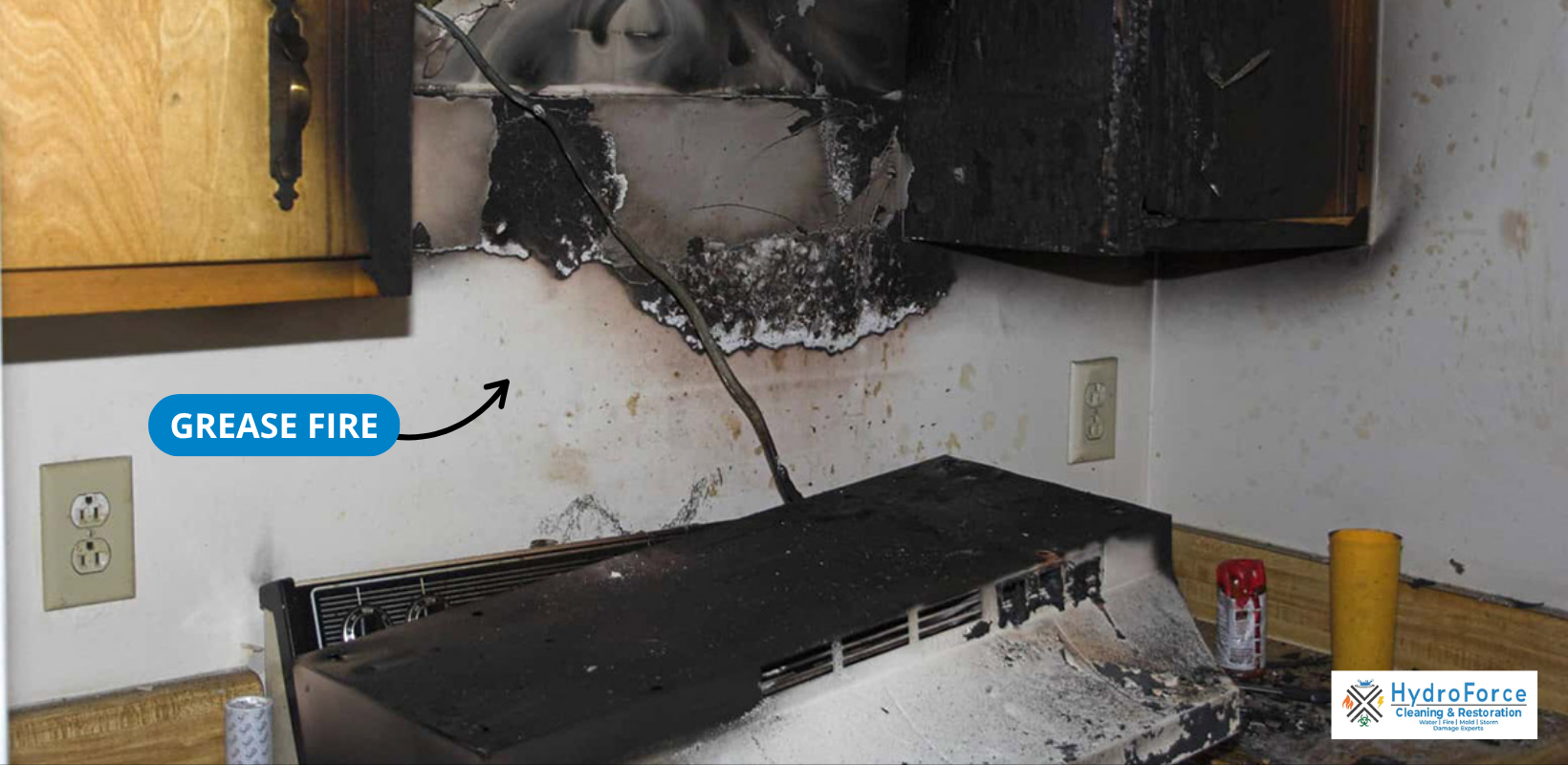
Scenario 2: Grease Fires
Oil in a frying pan flares up while the owner steps away from the stove. They smother it with a lid in under a minute, but greasy smoke residue coats the cabinets, range hood, and ceiling. Scrubbing with an all-purpose cleaner smears the residue instead of removing it, and the unit’s HVAC system carries the odor into both bedrooms. The job becomes kitchen-wide residue removal, duct cleaning, and deodorization.
Scenario 3: Space Heater Fires
A space heater placed next to the bed in a converted attic bedroom ignites the bedding overnight. Firefighters knock the fire down quickly, but the water they use soaks through the old plaster-and-lath ceiling to the main floor, cupping the hardwood and staining the ceiling below. Most of the restoration work is water extraction, structural drying, ceiling replacement, and floor repair rather than fire repair.
The pattern is consistent: the visible burn area is usually the smallest part of the damage. Smoke follows shared stairwells, pipe chases, and ductwork, while firefighting water travels down through floors and ceilings.
What Should You Do After a House Fire in Chicago?
After a house fire, get everyone to safety, stay out until fire officials clear the property, call your insurance company, and contact a professional fire damage restoration company. Follow these steps in order:
- Account for everyone and get medical help: Anyone exposed to smoke should be checked, even without obvious symptoms.
- Stay out until the building is cleared: Do not re-enter until the Chicago Fire Department or a qualified professional confirms it is safe.
- Call your insurance company: Report the fire as soon as possible and ask about coverage for temporary housing and emergency services.
- Document the damage if it is safe: Take photos and video of every affected room and your belongings before anything is moved.
- Skip the DIY cleanup: Soot is acidic and spreads when wiped, and household cleaners can set stains and odors permanently.
- Call a fire restoration company quickly: Soot begins to etch surfaces and discolor materials within hours, so fast response limits permanent damage.
Had a fire in your Chicago home? HydroForce Cleaning & Restoration responds 24/7 to secure the property, remove smoke and soot, and dry out water from firefighting. We work directly with your insurance company. Call 630-835-0862 for immediate help.
What Does Fire Damage Restoration Include?
Professional fire damage restoration covers smoke and soot removal, odor removal, water damage from firefighting, contents cleaning, and structural repairs. Damage almost always extends beyond the room where the fire started, so a full assessment comes first.
- Smoke and soot cleanup: Removing residue from walls, ceilings, floors, fixtures, and HVAC systems with methods matched to the type of soot.
- Smoke odor removal: Finding the odor source and neutralizing it with deodorization methods such as thermal fogging, ozone, or hydroxyl treatment.
- Water damage from firefighting: Extracting standing water and drying floors, walls, and subfloors to prevent mold.
- Contents pack-out and cleaning: Moving salvageable belongings off-site for cleaning, deodorizing, and secure storage during repairs.
- Structural repairs and reconstruction: Rebuilding damaged drywall, flooring, cabinetry, and framing.
Even a small fire can leave hidden soot inside walls, ductwork, and upstairs units.
Get Help After a Fire in Chicago
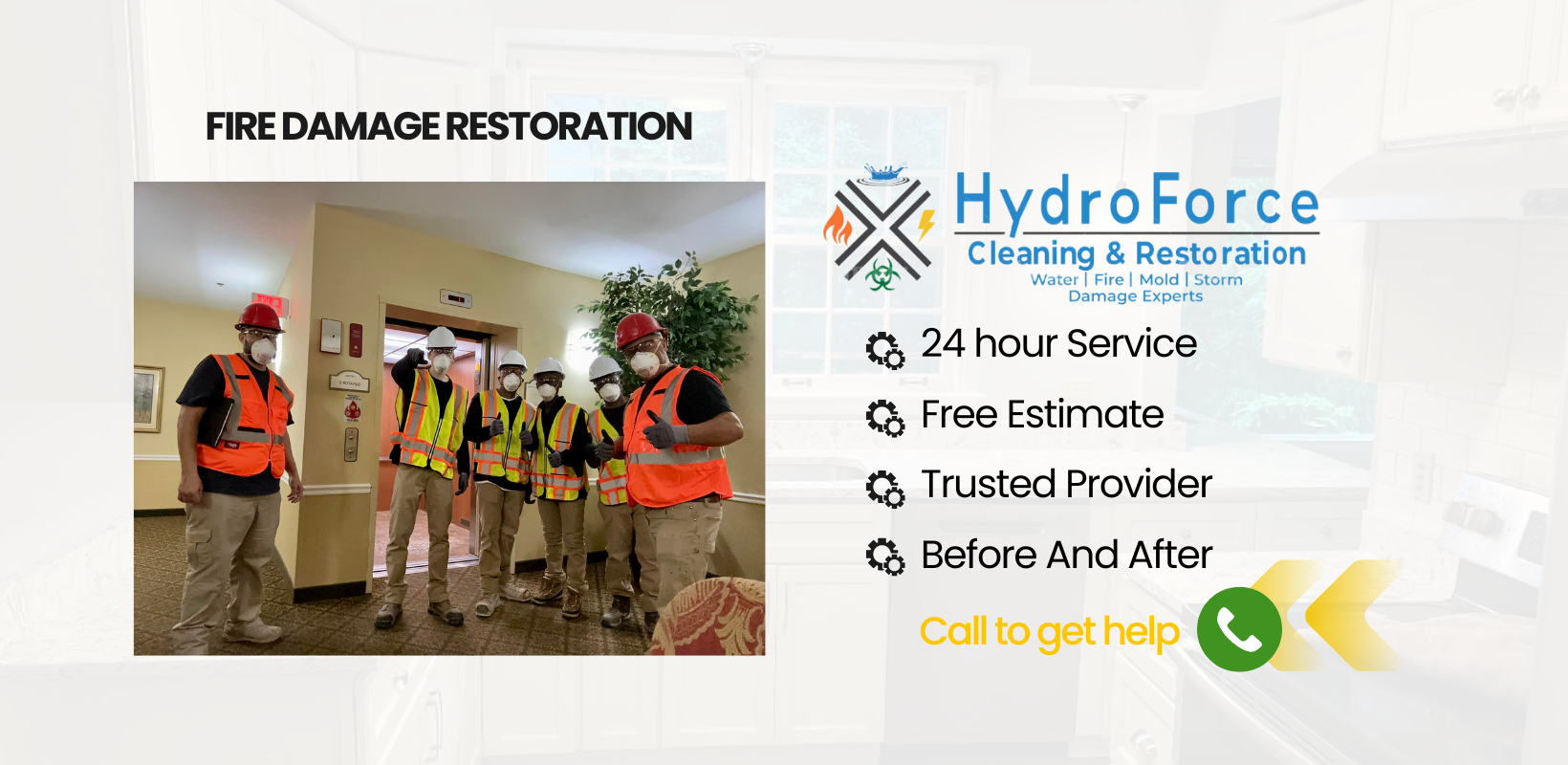
Most house fires start with a hazard that could have been caught early, so a 15-minute walkthrough of your home for these 11 hazards is one of the best things you can do for your home this season.
If a fire has already happened, fast action limits how far smoke, soot, and water damage spread. HydroForce Cleaning & Restoration provides fire and smoke damage restoration in Chicago, from emergency board-up and water extraction to soot removal, odor treatment, and full reconstruction.
Contact HydroForce or call us at 630-835-0862 to discuss your situation and learn how our restoration team can help.
Frequently Asked Questions About Home Fire Hazards in Chicago
What is the number one cause of house fires?
Cooking is the number one cause of house fires in the United States, most often because food is left unattended on the stovetop. Frying carries the highest risk because cooking oil can ignite quickly.
Are older Chicago homes more likely to have electrical fires?
Yes. Chicago homes built before 1950 may have knob-and-tube wiring, 60-amp service, or too few outlets for modern use. These systems overheat more easily, so older homes should get an inspection from a licensed electrician.
How far should a space heater be from furniture?
A space heater should be at least three feet from furniture, bedding, curtains, and anything else that can burn. Plug it directly into a wall outlet and turn it off when you leave the room or go to sleep.
Can e-bike and scooter batteries catch fire?
Yes. Lithium-ion batteries in e-bikes and scooters can overheat and ignite when damaged, poorly made, or charged improperly. Use certified batteries, the manufacturer’s charger, and never charge them overnight or near an exit.
How often should I clean my dryer vent?
Clean the dryer vent line at least once a year and the lint filter after every load. Homes with long basement vent runs or heavy laundry use may need cleaning more often.
Should I clean smoke damage myself after a small fire?
No. Soot is acidic and smears when wiped, and household cleaners can permanently set stains and odors. A professional restoration company uses cleaning methods matched to the type of soot and surface.