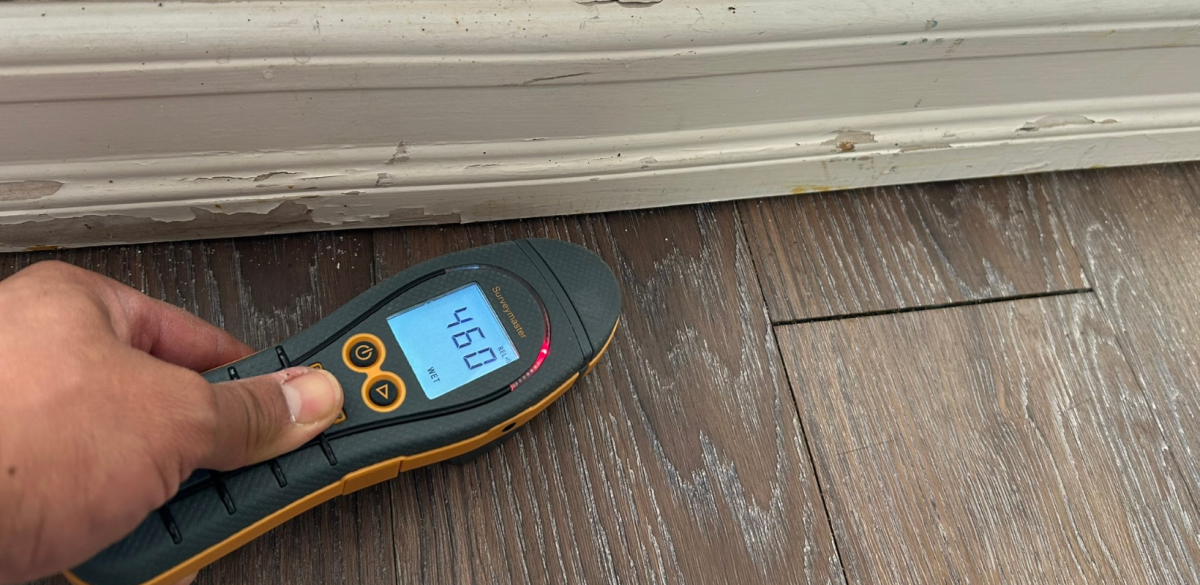

When water damages your home, drying the visible moisture is only part of the restoration process. Water can seep into drywall, flooring, insulation, wood framing, and other building materials, leaving hidden moisture behind even when surfaces feel dry.
Moisture mapping for water damage is the process of measuring moisture in affected building materials, recording where those readings were taken, and tracking changes throughout the drying process. Restoration professionals use this information to identify the extent of water damage, monitor drying progress, and help determine when affected materials have reached appropriate drying goals.
Without proper moisture mapping, hidden wet areas can go unnoticed, potentially contributing to further material damage and mold growth. If your home has experienced a burst pipe, appliance leak, basement flood, or other water intrusion, understanding moisture mapping can help you make informed decisions about the restoration process.
Key Takeaways
- Moisture mapping identifies affected areas: Technicians record moisture readings at specific locations to understand where water has spread.
- Drying requires ongoing monitoring: Repeated measurements help restoration professionals evaluate whether affected materials are drying as expected.
- There is no universal dry reading: Appropriate targets depend on the material, measuring instrument, and conditions. Technicians often compare affected materials with similar, unaffected materials in the same building.
- Moisture maps support restoration documentation: Maps, moisture logs, and drying records help explain the work performed and provide information that may be relevant to an insurance claim.
- Hidden moisture matters: Water can travel behind walls, beneath flooring, and into other concealed areas that are not obvious during a visual inspection.
What Is Moisture Mapping in Water Damage Restoration?
Moisture mapping is a systematic assessment of moisture in building materials after water damage. Restoration professionals use suitable moisture meters and other inspection tools to locate affected areas, record measurements, and track changes as drying progresses.
A moisture map typically includes a sketch or floor plan identifying affected rooms, building materials, measurement locations, and areas that appear unaffected. Technicians record readings at identified points and revisit those locations during the drying process when appropriate.
The goal is to establish the extent of the moisture problem, identify areas that require attention, and document whether drying is progressing toward the intended goals. For example, a burst pipe beneath a kitchen sink may leave visible water on the floor while also allowing moisture to spread into the cabinet base, nearby drywall, flooring, and wall cavity. Moisture mapping helps restoration professionals investigate these areas instead of relying only on what they can see.
The ANSI/IICRC S500 Standard for Professional Water Damage Restoration addresses building materials, drying technology, inspection, and project documentation. These principles help guide professional water damage restoration practices.
How Does Moisture Mapping Work?
Moisture mapping follows a series of inspection and monitoring steps. The exact process varies depending on the source of the water, the affected materials, and the extent of the damage.
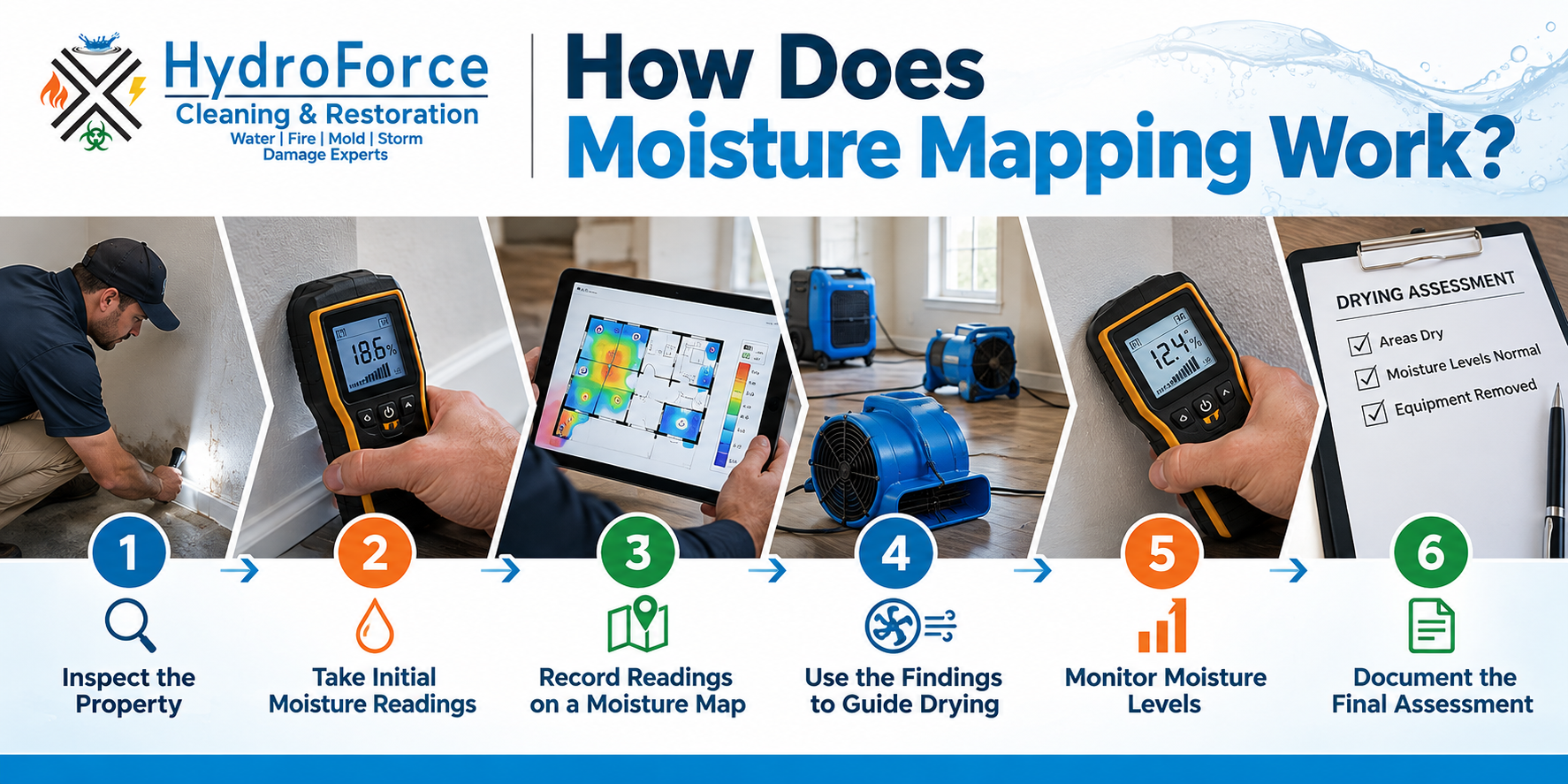
1. Inspect the Property and Identify Affected Areas
The restoration professional begins by assessing the visible damage and identifying the known or suspected source of water intrusion. The inspection may include walls, ceilings, flooring, cabinets, baseboards, and accessible areas where water could have traveled. Technicians also consider concealed spaces that may have been exposed to water, such as wall cavities or areas beneath flooring.
The purpose of this initial assessment is to determine where moisture measurements and further investigation are needed.
2. Take Initial Moisture Readings
Technicians use appropriate moisture meters to measure affected building materials. Depending on the material and the instrument, these readings may represent moisture content or a relative measurement used to compare conditions.
Readings from unaffected areas of similar materials may also be collected to help establish appropriate drying targets.
3. Record Readings on a Moisture Map
The technician documents measurement locations on a sketch or floor plan and records the corresponding readings in a moisture log. For example, a map might identify a kitchen wall as Wall 1 and mark several measurement points along its lower section. Each point can then be checked again during follow-up inspections.
This consistent labeling helps the restoration team compare readings from the same locations over time.
4. Use the Findings to Guide Drying
Moisture readings, environmental conditions, and the characteristics of affected materials help restoration professionals determine the appropriate drying approach.
Depending on the situation, equipment may include air movers, dehumidifiers, or other specialized drying equipment. Additional investigation or material removal may be necessary if moisture is trapped in inaccessible areas or materials cannot be adequately dried in place.
5. Monitor Moisture Levels Throughout Drying
Technicians repeat measurements at documented locations and compare the results with earlier readings and appropriate drying targets.
If an area is drying more slowly than expected, the restoration team can investigate the cause and adjust the drying approach when necessary.
6. Document the Final Drying Assessment
Before the drying phase is considered complete, the restoration professional evaluates the affected materials against the established drying goals and documents the results.
Final measurements should be interpreted in the context of the material, measuring method, environmental conditions, and overall assessment. A single reading does not necessarily establish that every part of a building assembly is dry.
What Is the Difference Between a Moisture Map, Moisture Log, and Drying Log?
Although these terms are related, each describes a different part of water damage restoration documentation.
| Document | What It Shows | Primary Purpose |
|---|---|---|
| Moisture Map | A floor plan or sketch showing where moisture readings were taken and which areas were affected. | Visualizes the location and extent of moisture. |
| Moisture Log | Recorded moisture readings from specific materials and locations. | Tracks moisture measurements over time. |
| Drying Log | Drying equipment, environmental conditions, inspection notes, and progress. | Documents the drying process and restoration progress. |
Together, these records provide a more complete picture of the water damage and the drying process than any single document alone.
When reviewing your restoration paperwork, ask how the company records moisture measurements, monitors drying progress, and documents its final assessment.
What Tools Are Used for Moisture Mapping?
Moisture mapping can involve several instruments. The appropriate tools depend on the affected materials, the suspected location of water, and the information needed during the inspection.
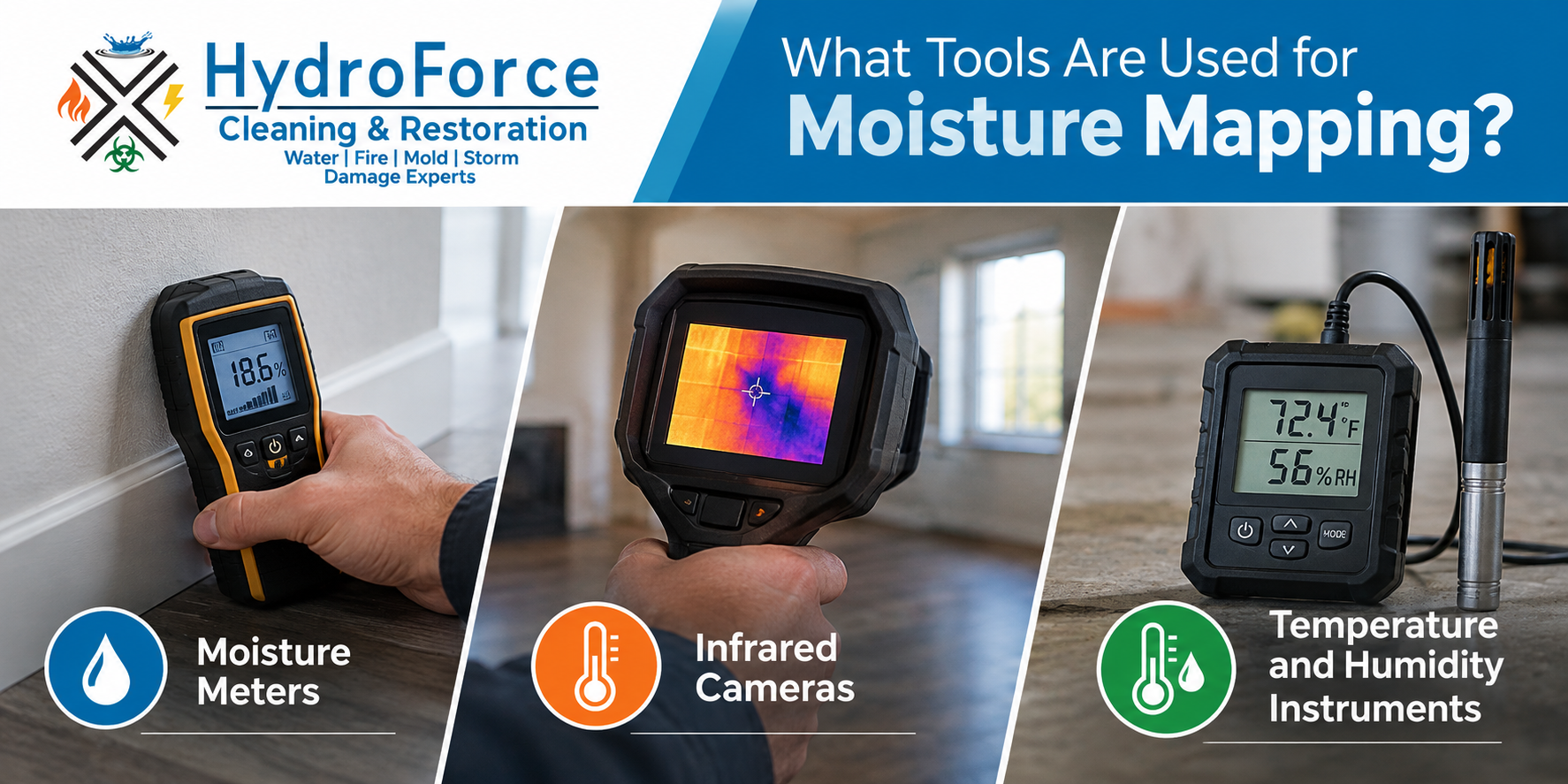
Moisture Meters
Moisture meters measure moisture content in certain materials or provide relative readings that help technicians compare conditions.
Two common types are:
- Pin-type moisture meters: These use small probes inserted into a material to measure electrical properties associated with moisture. Some models can measure moisture content in wood, while other applications require material-specific interpretation.
- Pinless moisture meters: These use sensors placed against a surface to assess moisture-related changes without leaving pinholes. They can help technicians scan larger areas efficiently.
Neither type is universally best for every material. The technician must understand the instrument’s capabilities and limitations when interpreting the readings.
Infrared Cameras
Infrared cameras display surface temperature patterns. These patterns can help identify areas that warrant further investigation because moisture can influence surface temperatures.
However, an infrared camera does not directly confirm the presence of water or mold. Temperature differences can have several causes, so suspected moisture should be evaluated using suitable verification methods.
Infrared imaging can complement moisture meters, but it should not replace appropriate measurements or professional judgment.
Temperature and Humidity Instruments
Drying professionals may also measure temperature and relative humidity to understand the conditions affecting evaporation and drying.
These measurements help the technician evaluate the drying environment and determine whether changes to equipment or conditions may be beneficial. The combination of material readings and environmental measurements can provide a more useful assessment of drying progress than surface observations alone.
What Should a Complete Water Damage Moisture Map Include?
The appropriate documentation varies by project, but a useful moisture map and its supporting records should clearly identify affected areas, measurement locations, and drying progress.
Use this checklist when reviewing the documentation provided by your restoration company.
- A property sketch or floor plan: Identifies affected rooms and the areas being assessed.
- Labeled measurement points: Shows where individual readings were taken so technicians can revisit the same locations.
- Affected and comparison areas: Distinguishes suspected wet areas from areas used to help establish reference conditions.
- Material identification: Records whether the readings relate to drywall, wood, plaster, flooring, masonry, or another material.
- Dated moisture readings: Documents changes throughout the drying process.
- Drying targets or reference readings: Explains how the technician evaluates whether affected materials are approaching appropriate drying goals.
- Equipment and environmental information, when relevant: Helps document the drying approach and the conditions during restoration.
- Supporting photographs, when appropriate: Provides additional visual context for the damage, measurement locations, and restoration work.
A moisture map does not always contain every detail in this list on the sketch itself. Some information belongs in separate logs, photographs, or project records.
The important point is that the documentation should be clear enough to explain where the damage occurred, what was measured, and how the restoration team evaluated drying progress.
How Do You Read Moisture Map Readings?
Moisture map readings show how materials compare with their previous measurements and appropriate drying targets. Understanding what the numbers represent is important because a reading from one material or instrument may not be directly comparable with a reading from another.
Moisture Content vs. Relative Moisture Readings
Moisture content generally describes the amount of moisture in a material, expressed using a defined measurement method. Some meters can provide moisture-content readings for materials they are calibrated or designed to measure.
Other instruments provide relative readings that help identify differences between areas or track changes over time.
For example, a relative reading of 15 on a particular meter does not automatically mean the material contains 15% water. Its meaning depends on the instrument and the material being tested.
This is why restoration professionals should interpret readings according to the meter’s specifications rather than assuming every displayed number represents a percentage.
What Is a Dry Standard in Water Damage Restoration?
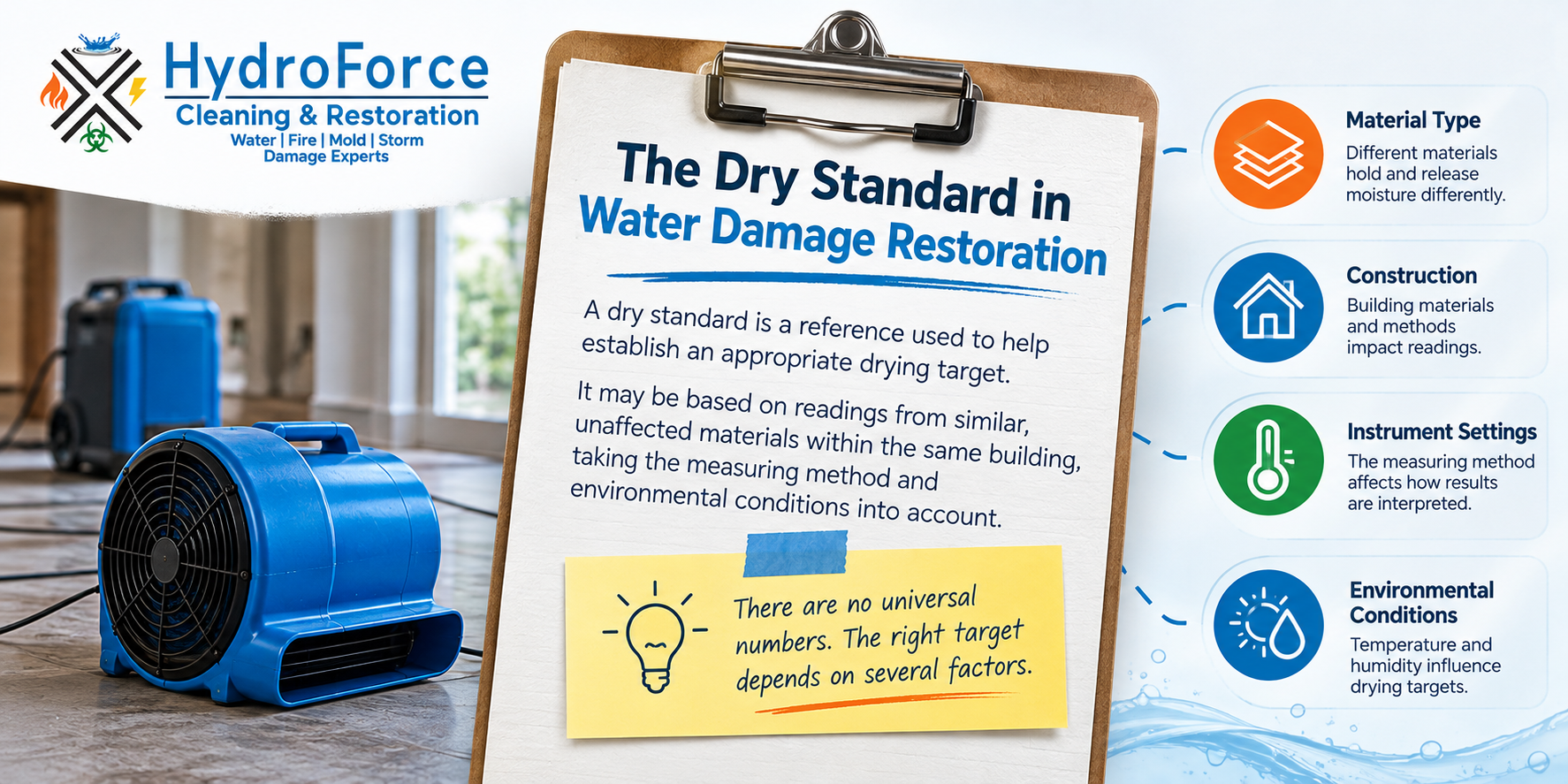
A dry standard is a reference used to help establish an appropriate drying target. It may be based on readings from similar, unaffected materials within the same building, taking the measuring method and environmental conditions into account.
For example, a technician may compare water-affected wood trim with similar trim in an unaffected area. If the affected material initially reads substantially differently, repeated measurements can help show whether it is moving toward the reference condition.
Dry standards are not universal numbers that apply to every home. Material type, construction, instrument settings, and environmental conditions all affect how readings should be interpreted.
Why Moisture Readings Can Be Different Between Materials
Drywall, plaster, wood, concrete, and masonry have different physical properties. A reading obtained from one material cannot necessarily be interpreted the same way as a reading from another. Some meters are designed primarily for wood, while other applications require relative comparisons or different measurement techniques.
A useful moisture log should identify the measurement locations and materials, document the instrument or method when relevant, and explain the drying targets used to evaluate progress.
Can Moisture Mapping Detect Hidden Water Damage?
Yes. Moisture mapping can help restoration professionals identify suspected water damage beyond the surfaces where water is immediately visible.
Water can travel through porous materials, collect beneath flooring, move through wall cavities, or spread into adjoining rooms. The visible stain or puddle may represent only part of the affected area.
For example, a ceiling stain beneath an upstairs bathroom may indicate water intrusion that has affected ceiling materials and potentially other concealed building components. An inspection can help determine where additional moisture measurements or investigation are needed.
However, moisture mapping has limitations. Some materials or assemblies are difficult to assess without access, and no single meter or imaging method can reliably identify every hidden wet area in every situation.
When the initial inspection suggests moisture may be trapped behind a wall, beneath flooring, or inside insulation, the restoration professional may recommend further investigation to determine the extent of the damage.
Finding and addressing hidden moisture is important because persistent dampness can contribute to material deterioration and mold growth. The U.S. Environmental Protection Agency emphasizes controlling moisture and promptly drying water-damaged materials to help prevent mold problems.
7 Warning Signs of Inadequate Water Damage Drying Documentation
If your home has experienced water damage, understanding the documentation process can help you ask informed questions about the restoration work.
Watch for these potential warning signs:
- No Clear Record of Measurement Locations: A list of numbers without corresponding rooms, walls, floors, or measurement points makes it difficult to understand where moisture was found.
- No Follow-Up Moisture Readings: If there is no record of follow-up measurements, it may be difficult to determine whether affected materials are drying as expected.
- Readings Without Material or Instrument Context: Measurements can be misleading when the material, meter type, or interpretation method is unclear.
- No Assessment of Potentially Hidden Moisture: If water may have reached wall cavities, flooring, insulation, or other concealed areas, ask how those areas were evaluated.
- No Documented Drying Targets: Ask how the restoration professional determines when affected materials have reached appropriate drying goals.
- No Final Drying Documentation: Before the drying phase is closed out, ask for the final readings or other documentation used to support the conclusion that drying goals have been met.
- No Explanation of Changes to the Drying Plan: If some areas are drying more slowly than others, ask what the readings indicate and whether additional investigation or adjustments are needed.
One missing document does not automatically mean a restoration job was performed incorrectly. However, unclear or incomplete records are a reasonable reason to request an explanation.
Already working with another contractor and concerned about the drying process? HydroForce Cleaning & Restoration can discuss your water damage concerns and help you understand what an appropriate assessment may involve. Call (630) 835-0862.
Moisture Mapping Challenges in Chicago Homes
Moisture mapping can be more complex in Chicago homes because building materials, construction styles, and seasonal weather affect how water moves and how quickly materials dry.
- Plaster and Lath Walls: Older Chicago homes may have plaster walls over wood or metal lath. Moisture readings can vary depending on the materials and wall construction, so restoration professionals may need to use multiple assessment methods.
- Older Wood-Frame Construction: Water can travel through wall cavities, along framing, or between wood floors. Moisture mapping helps identify affected areas beyond the visible water damage, although additional inspection may be necessary to locate hidden moisture.
- Basements and Below-Grade Apartments: Chicago basements and garden-level units can be affected by plumbing leaks, seepage, or water intrusion. Mapping moisture levels across floors, walls, and other accessible materials helps establish the extent of the affected area.
- Cold Weather and Winter Drying: Low outdoor temperatures and seasonal humidity conditions can affect indoor drying strategies. Restoration professionals may need to monitor indoor temperature, humidity, and material moisture levels to evaluate drying progress.
How Does Moisture Mapping Help With a Water Damage Insurance Claim?
Moisture maps, moisture logs, photographs, and drying records can help document the extent of water damage and explain the restoration work performed. For example, records may show which materials were affected, how readings changed over time, and why additional drying or investigation was considered necessary.
Insurance adjusters may review this information when evaluating a claim, but moisture mapping does not guarantee insurance coverage or payment. Coverage depends on the policy, the cause of the damage, applicable exclusions, and the insurer’s claim assessment.
Homeowners should keep copies of relevant restoration documentation, photographs, estimates, invoices, and communications with their insurance company. When reviewing a restoration estimate, ask the contractor to explain how the documented damage and drying activities relate to the proposed work.
HydroForce Cleaning & Restoration documents water damage restoration activities to help customers understand the work performed and communicate with their insurance adjuster.
What Should You Ask Your Water Damage Restoration Company?
Asking questions throughout the restoration process can help you understand how moisture is being assessed and how the drying team evaluates progress.
Questions to Ask During the Initial Inspection
- Where has moisture been detected, and which areas need further investigation?
- What types of materials have been affected?
- What instruments or methods will you use to assess moisture?
- How will you establish appropriate drying targets?
- Will I receive copies of the moisture map and supporting records?
Questions to Ask During Drying
- How have the readings changed since the last inspection?
- Which areas are drying most slowly?
- Do the readings indicate that the drying plan needs to change?
- Is there any indication of moisture in concealed areas that needs further investigation?
Questions to Ask Before the Drying Phase Ends
- Have the affected materials reached the established drying goals?
- What final readings or other assessments support that conclusion?
- Can I receive copies of the relevant drying records and photographs?
- Are any additional repairs or inspections recommended before reconstruction?
Clear answers to these questions can help you understand the restoration process and the basis for decisions about drying and repairs.
Protect Your Home with Professional Water Damage Restoration
Water damage restoration involves more than removing visible water and waiting for surfaces to dry. Moisture can remain inside building materials and concealed spaces, making careful assessment and documented drying progress important parts of the restoration process.
Moisture mapping helps restoration professionals identify affected areas, track measurements, and evaluate whether materials are approaching appropriate drying goals. Understanding the process can also help you ask informed questions and keep better records of the work performed.
HydroForce Cleaning & Restoration provides professional water damage restoration services throughout Chicago and the surrounding Chicagoland area. Our IICRC-certified technicians are available 24/7 to assess water damage, help manage the restoration process, and document moisture conditions as appropriate.
If your home has experienced a burst pipe, flooding, an appliance leak, or another water intrusion, contact HydroForce Cleaning & Restoration to discuss your situation.
Call (630) 835-0862 or request a free estimate to get started.
Moisture Mapping for Water Damage FAQs
What is moisture mapping?
Moisture mapping is the process of measuring moisture in building materials after water damage and documenting the locations and results. Restoration professionals use these measurements to assess the extent of moisture and monitor drying progress.
How long does moisture mapping take?
The initial inspection and mapping may take a few hours, depending on the size and complexity of the affected area. Follow-up measurements are taken throughout the drying process, which may take several days or longer depending on the materials, extent of damage, and environmental conditions.
Can I do moisture mapping myself with a hardware store moisture meter?
A consumer moisture meter can help you investigate some visible or accessible areas, but it may not identify all hidden moisture or provide readings suitable for every building material. Professional assessment may be needed when water has spread into concealed spaces or affected multiple materials.
Does moisture mapping detect mold?
No. Moisture mapping helps identify and monitor moisture conditions that may contribute to mold growth, but it does not independently confirm the presence of mold or identify mold species. Suspected mold growth may require a separate assessment.
Can moisture mapping detect water behind drywall?
Moisture mapping can help identify areas where water may have affected drywall or the surrounding wall assembly. However, detection depends on the instruments, materials, and accessibility. Additional investigation may be necessary to confirm the extent of hidden moisture.
How do restoration professionals know when a home is dry?
Professionals evaluate affected materials against appropriate drying targets, which may include readings from similar, unaffected materials and other relevant measurements. The assessment should account for the material, measurement method, and environmental conditions rather than relying on one universal meter reading.
Does insurance require a moisture map?
Insurance requirements vary by policy and claim. Moisture maps and drying logs can help document the damage and restoration work, but homeowners should confirm documentation expectations and coverage questions with their insurance adjuster.
Do I get a copy of the moisture map?
Ask your restoration company for a copy of the moisture map and the supporting moisture or drying records. Keeping these documents with your estimates, invoices, photographs, and insurance communications can help you maintain a record of the restoration work.