
Categories
Restoration Tips water damage

How to Fix a Clogged Sink to Prevent Water Damage: Kitchen & Bathroom Guide

24/7 EMERGENCY SERVICE RESIDENTIAL & COMMERCIAL SERVICES

How to Fix a Clogged Sink to Prevent Water Damage: Kitchen & Bathroom Guide

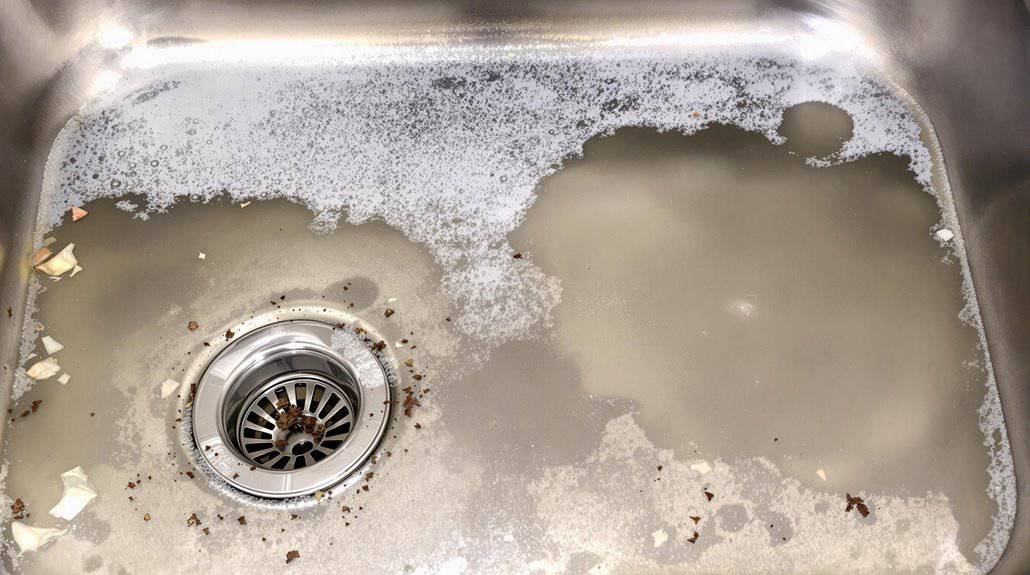
Dealing with a clogged sink is never pleasant. Whether water is backing up in the basin or unpleasant odors are coming from the drain, it’s important to address the problem as soon as possible. A clogged kitchen or bathroom sink can quickly escalate from a minor inconvenience into a serious water damage problem if left unresolved.

You can choose to tackle a clogged sink as a DIY project or call a professional plumber, but acting quickly is essential to prevent leaks, overflows, and damage to cabinets, flooring, and walls. Because kitchen sinks, bathroom sinks, and single- or double-basin sinks clog for different reasons, using the right method matters.

In this guide, we’ll explain how clogged sinks lead to water damage, identify common causes, outline safety precautions, and walk you through step-by-step solutions for both kitchen and bathroom sink clogs. We’ll also share prevention tips, warning signs of hidden water damage, and when it’s time to call a professional.


Key Takeaways


Why a Clogged Sink Can Cause Water Damage

A clogged sink can lead to water damage when backed-up water overflows, leaks under cabinets, or slowly seeps into surrounding materials. Even a slow drain can cause long-term moisture exposure that weakens your home’s structure.

If you discover a clogged sink, it’s important to address it right away, either through DIY methods or by contacting a professional. Delaying action can lead to costly consequences, including:

  • Water leaks and overflows: Blocked drains force water back up, increasing the risk of spills and leaks that can spread throughout your home.
  • Damage to surrounding areas: Cabinets, flooring, drywall, and baseboards can absorb moisture and deteriorate over time.
  • Structural repairs: Prolonged water exposure may lead to mold growth and structural damage. In severe cases, structural water damage repairs can exceed $10,000.

Taking prompt action helps homeowners prevent water damage and avoid unnecessary repair costs.

Common Causes of Kitchen and Bathroom Sink Clogs

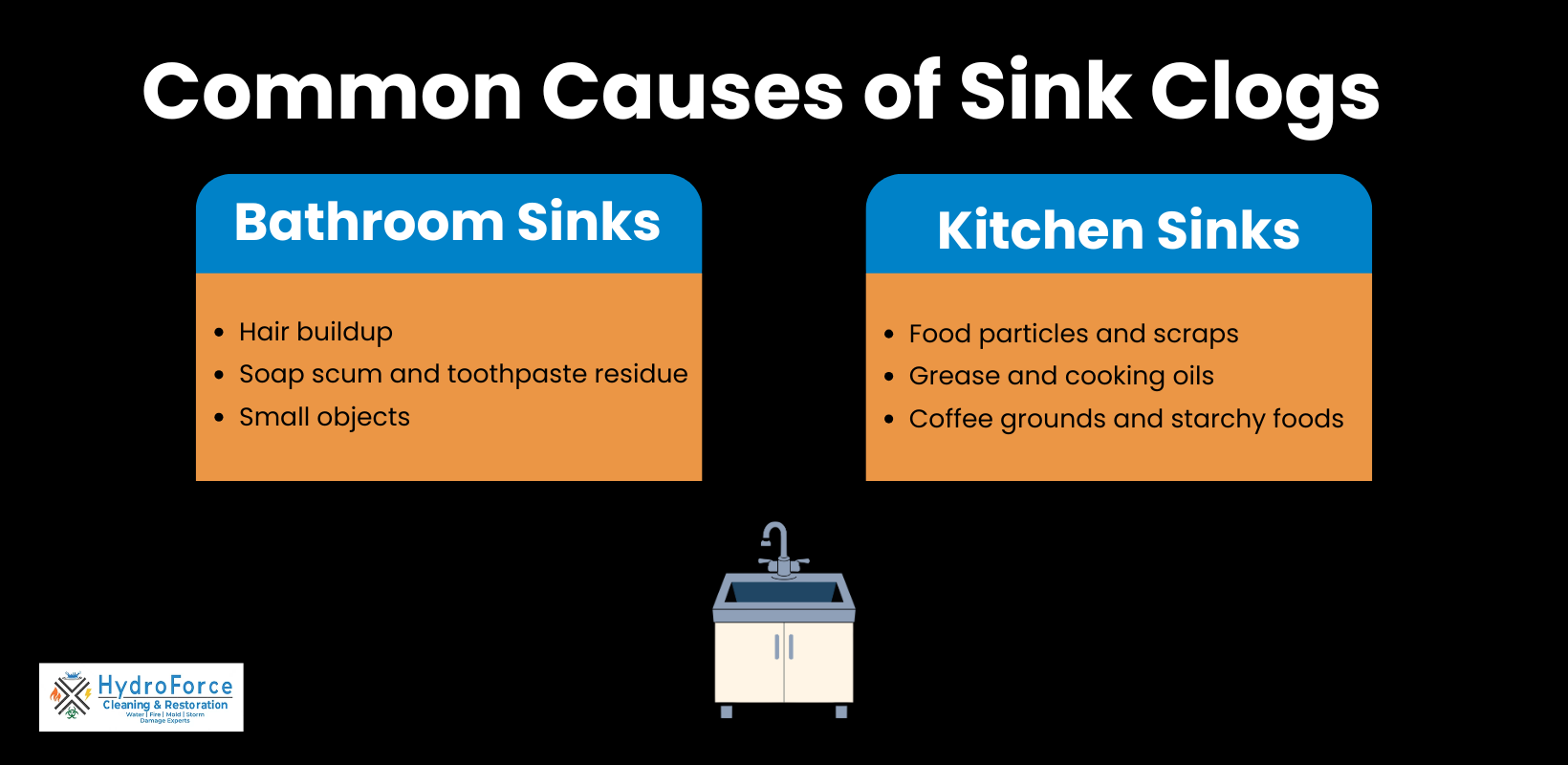
Common Causes of Sink Clogs - HydroForce Cleaning and Restoration

Sink clogs can develop for a variety of reasons, which is why it’s important to understand their causes and how to prevent them. Understanding what causes sink clogs can help you choose the right fix and prevent future blockages.

Kitchen Sink Clog Causes

Kitchen sinks typically clog due to:

  • Food particles and scraps
  • Grease and cooking oils that harden inside pipes
  • Coffee grounds and starchy foods

Read: How to Remove Mold from the Caulk Around Your Kitchen Sink

Bathroom Sink Clog Causes

Bathroom sink clogs are often caused by:

  • Hair buildup
  • Soap scum and toothpaste residue
  • Small objects that accidentally fall into the drain

Plumbing Issues in Older Homes

In older homes, sink clogs may result from:

  • Corroded or narrowing pipes
  • Mineral buildup from hard water
  • General wear and tear in aging plumbing systems

These issues often require professional plumbing assistance.

Safety Precautions Before Fixing a Clogged Sink

Before attempting any DIY drain cleaning, take these safety steps to prevent injury or additional plumbing damage.

  • Shut off the water supply: Turn off the water at the main valve, which may be located inside or outside your home, to prevent accidental leaks or flooding.
  • Wear protective gear: Wear sturdy gloves and safety glasses, especially when using tools or cleaning products, to protect your hands and eyes.
  • Limit chemical cleaners: Avoid harsh chemical drain cleaners whenever possible, as they can damage pipes and pose health risks.

How to Fix a Clogged Kitchen Sink

If your kitchen sink becomes clogged, it’s important to address the issue promptly so water can flow freely again. Below are several effective methods you can try, starting with the simplest solutions and working your way up if needed.

Method 1: Boiling Water (Best for Grease Clogs)

Boiling water can help break down grease and residue:

  1. Allow standing water to drain, if possible.
  2. Bring a pot or kettle of water to a rolling boil.
  3. Slowly pour the hot water directly into the drain.
  4. Check drainage and repeat if necessary.

Method 2: Baking Soda and Vinegar (Best for Organic Buildup)

This natural method works well for food residue and odors:

  • Pour baking soda down the drain.
  • Follow with vinegar and allow it to bubble for several minutes.
  • Flush with hot water to clear loosened debris.

Read: Is Bleach or Vinegar Better for Killing Mold?

Method 3: Plunging a Double-Basin Sink

For double sinks, proper technique is key:

  1. Use a cup plunger that seals tightly over the drain.
  2. Seal the second drain with a wet rag.
  3. Plunge steadily for 30–60 seconds.
  4. Pull the plunger away quickly to change pressure.
  5. Flush with boiling water to confirm proper drainage.

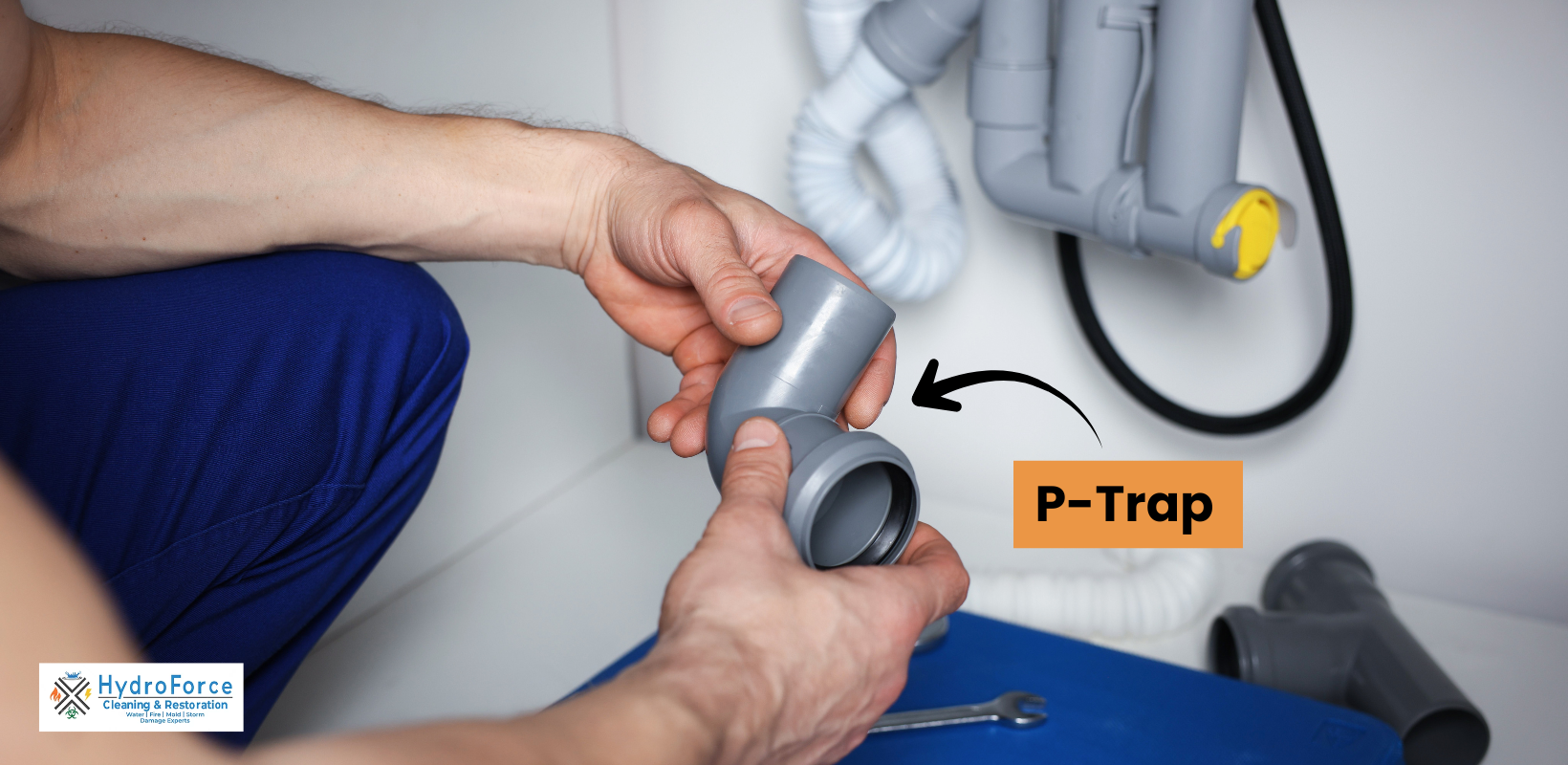
Method 4: Drain Snake or P-Trap Cleaning

If the clog persists:

  • Carefully remove and clean the P-trap.
  • Use a drain snake to reach deeper blockages.
  • If pipes appear old or corroded, stop and call a plumber.

Methods to Unclog a Sink to Prevent Water Damage - HydroForce Cleaning and Restoration

When to Call a Plumber for a Clogged Sink

Contact a professional plumber if you notice:

  • Repeated clogs
  • Slow drainage after DIY attempts
  • Gurgling sounds or water backing up into other drains

How to Fix a Clogged Bathroom Sink

Bathroom sink clogs usually differ from kitchen clogs due to hair and soap buildup rather than grease.

  • Use a hair catcher or drain guard: This simple solution helps prevent hair and debris from entering the drain and can be installed easily with little to no experience.
  • Baking soda and vinegar: This works well for soap scum buildup or minor blockages, helping to break down residue naturally.
  • Plunger: A small sink plunger can be effective for clearing light clogs in bathroom sinks.
  • P-Trap cleaning or hand auger: If the clog is deeper in the pipe, removing and cleaning the P-trap or using a hand auger can help dislodge the blockage.
  • Professional plumber: If none of these methods resolve the issue, it’s best to contact a licensed plumber to prevent further damage and ensure the problem is properly fixed.

How to Prevent Sink Clogs and Water Damage

Preventing sink clogs starts with daily habits and routine maintenance that keep debris out of your plumbing system. Simple habits and regular maintenance can keep your drains flowing smoothly:

Kitchen Sink Prevention Tips

  • Avoid pouring grease or cooking oil down the drain.
  • Dispose of food scraps in the trash, not the sink.
  • Run hot water after use to reduce buildup.

Bathroom Sink Prevention Tips

  • Use hair strainers in sinks.
  • Rinse drains regularly to prevent soap residue.
  • Avoid flushing non-dissolvable items down drains.

Professional Drain Maintenance

  • Schedule periodic plumbing inspections.
  • Address minor issues before they escalate into major repairs.

Signs a Clogged Sink is Causing Hidden Water Damage

Some water damage isn’t immediately visible. Watch for warning signs such as:

  • Musty odors under sinks
  • Swollen or warped cabinets
  • Soft or buckling flooring
  • Mold growth near plumbing fixtures
  • Water stains on walls or ceilings

If you notice any of these issues, professional water damage restoration may be necessary.

Read: Best Detection Methods to Find Water Leaks in Your House

Tools & Products to Keep Sinks Clear

Keeping a few key tools and products on hand can help prevent clogs and make it easier to maintain your sinks:

Professional Water Damage Restoration from HydroForce

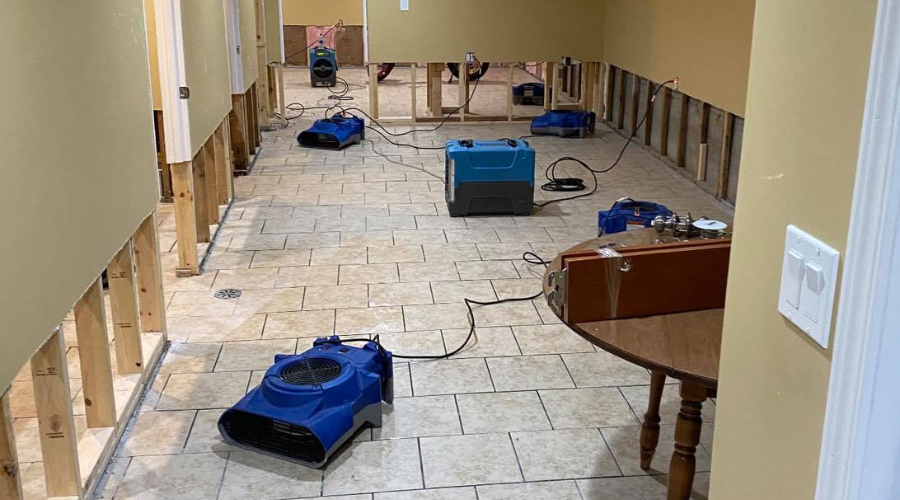
Water Damage Restoration in Chicago, IL - HydroForce Cleaning and Restoration

Homeowners often underestimate how quickly a small sink clog can turn into serious water damage. Restoration professionals frequently see damage that began with a slow drain or unnoticed leak beneath a sink. Even minor clogs should be addressed quickly to prevent damage to cabinets, flooring, walls, and your home’s structure. Regular drain maintenance is far more cost-effective than repairing water damage after it occurs.

Don’t let a clogged sink turn into a costly disaster. Acting quickly is key to preventing water damage to your cabinets, flooring, walls, and the structure of your home. At HydroForce Cleaning and Restoration, our team of experts provides fast, professional water damage restoration services to keep your home safe and your plumbing in top shape.

Whether you’re dealing with a minor clog, a severe backup, or water damage that’s already begun, we’re here to help. Contact HydroForce now to assess the situation, restore your property, and prevent future damage before it becomes a major expense.

Call HydroForce Cleaning and Restoration at (630) 835-0862 today for professional water damage restoration in Chicago, IL, and nearby areas.


Frequently Asked Questions (FAQs)

Yes. A clogged sink can cause water damage when backed-up water overflows or leaks under cabinets and into walls or flooring. Even slow leaks from clogged drains can lead to mold growth, warped cabinets, and structural damage if not addressed quickly.

The most common cause of a clogged kitchen sink is grease and food debris buildup. Cooking oils and grease solidify inside pipes, trapping food particles and restricting water flow over time.

Bathroom sinks clog frequently due to hair, soap scum, toothpaste residue, and small objects entering the drain. These materials stick to the inside of pipes and gradually reduce drainage capacity.

Yes, repeated use of chemical drain cleaners can damage pipes, especially in older plumbing systems. Harsh chemicals can corrode metal pipes and weaken plastic ones, increasing the risk of leaks and water damage.

Categories
Fire and smoke damage restoration Restoration Tips

4 Reasons Why Your Smoke Detector is Beeping

24/7 EMERGENCY SERVICE RESIDENTIAL & COMMERCIAL SERVICES

Proper maintenance of your smoke detectors is essential to ensure they function effectively when you need them most and to prevent major fire damage. Understanding why your smoke detector is beeping, how to troubleshoot issues, and when to replace it are key steps in keeping your home or business safe from fire.

In this article, we’ll explore the common reasons behind smoke detectors beeping, the meaning of various chirping and beeping patterns, and a step-by-step guide to troubleshooting a beeping alarm. You’ll also learn how to change the battery in your smoke detector and the importance of scheduling regular fire alarm inspections to maintain optimal safety.

Why is My Smoke Detector Beeping?

Understanding why your smoke detector is beeping is essential for troubleshooting and ensuring it functions properly. To help you address the issue, here are a few key things to check:

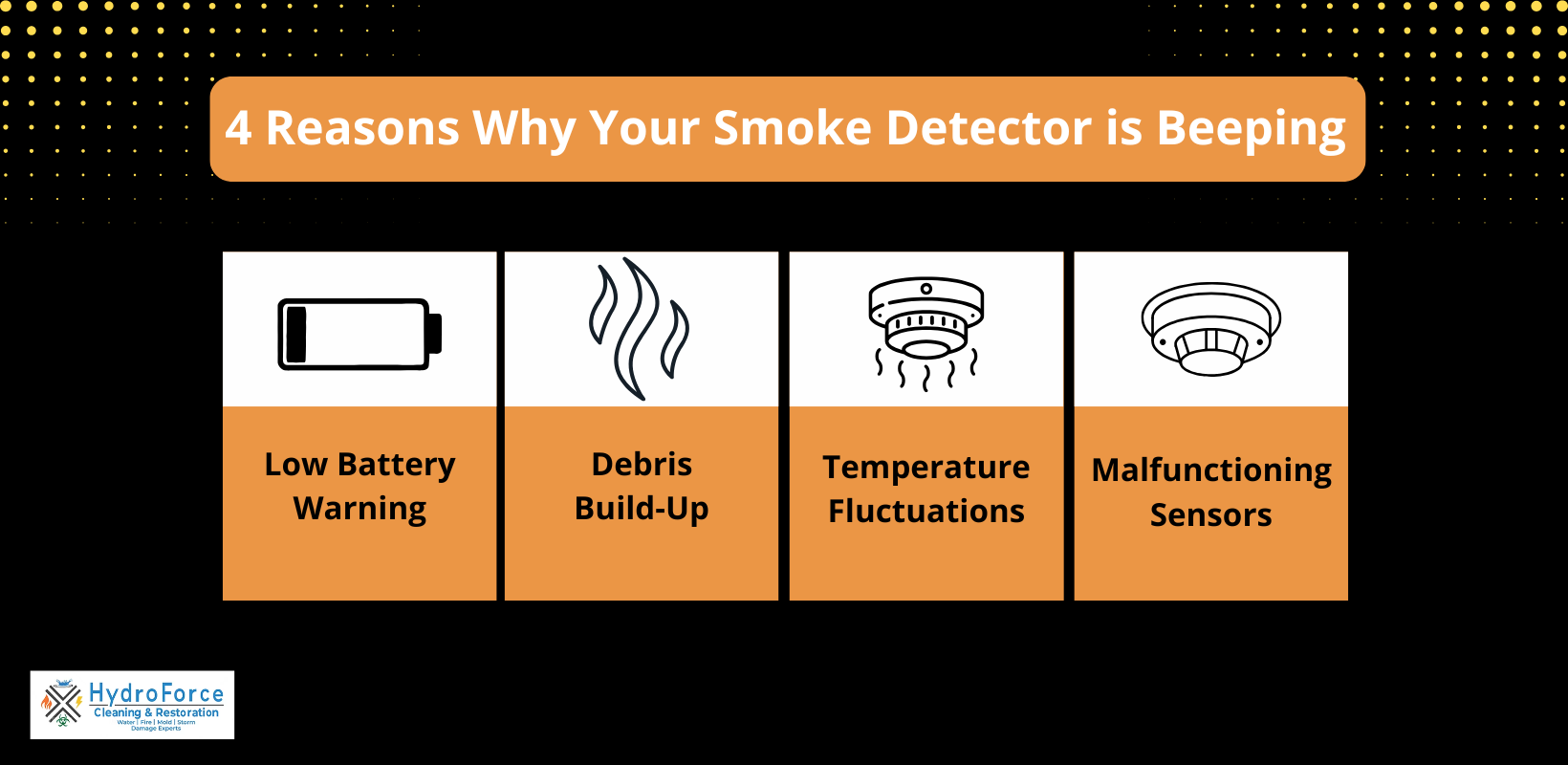
  1. Low Battery Warning: A beeping smoke detector often signals a low battery. Whether it uses a 9V or lithium battery, be sure to replace it promptly to ensure the detector functions correctly and keeps you protected from potential fires.
  2. Debris Build-Up: If your smoke detector is chirping, it might be due to accumulated dust or debris interfering with its performance. Gently clean the detector using a soft cloth or an air blower to remove any obstructions and restore proper functionality.
  3. Temperature Fluctuations: Sudden temperature changes can sometimes trigger smoke detectors. Steam from showers, extreme attic cold, or heat from a stove are common culprits. If these fluctuations persist, consider relocating the detector to a more stable environment.
  4. Malfunctioning Sensors: Faulty sensors can also cause a smoke detector to chirp. These devices rely on steady voltage, which can be disrupted by loose battery connections or sensor malfunctions. Check the battery terminals, ensuring the battery is securely attached, and inspect the system for any loose connections. If needed, reattach the battery firmly to restore proper operation.

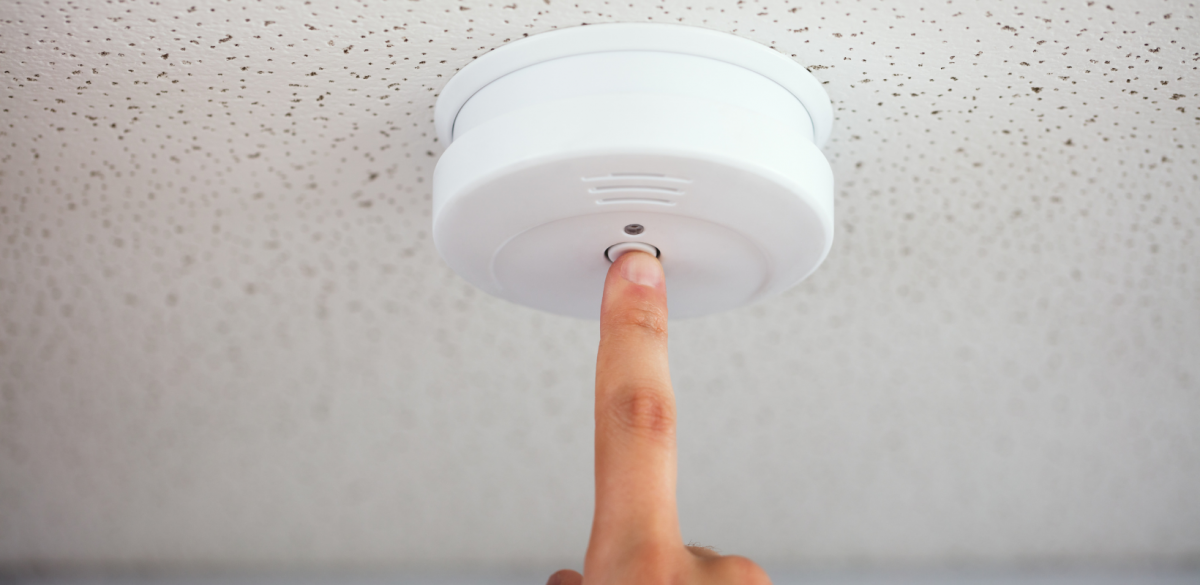
Why is My Smoke Detector Beeping - HydroForce Cleaning and Restoration

The Meaning of Smoke Detector Beeping and Chirping Patterns

Understanding the different chirping patterns on your smoke alarm is essential so you can take proper action. You should always refer to the owner’s manual to make sure you are correctly interpreting the problem. Here’s a quick overview of common chirping patterns and their meanings:

  • Beep-Beep-Beep: Smoke Detected: A series of three loud, consecutive beeps indicates that the smoke detector has detected smoke and there may be a fire in your property. Take immediate action.
  • Chirp-Chirp-Pause: Sensor Issue: If your smoke detector emits a series of chirps followed by a pause, it’s signaling a malfunction. This sound typically means the sensor may be obstructed or faulty. Check the detector to ensure it is functioning properly, as it cannot distinguish between a fire and a technical issue.
  • Single Beep with a Long Pause: Low Battery or Maintenance Needed: A single beep followed by a long pause usually means the battery is running low and needs replacing. However, this pattern can also indicate that the detector’s sensors are blocked by dirt or dust, or that the device itself may need to be replaced. Regular maintenance is key to keeping your smoke detector in top working condition.

Steps to Troubleshoot a Beeping Fire Alarm

Knowing how to troubleshoot a beeping fire alarm is essential for quick action and preventing potential damage to your property. Here’s a simple guide to help you address the issue effectively.

  1. Continuous Beeping: Evacuate your property immediately is this indicates the presence of a fire.
  2. Intermittent Beeping: Check the battery and connections on your fire alarm.
  3. Chirping: Replace the battery right away so you can ensure it works properly in the future.
  4. Listen to the Beep: Check for fire signs so you can avoid further damage.
  5. Change the Batteries: Use the proper batteries meant for your alarm.
  6. Clean the Alarm: Dust it off or use an air blower.
  7. Check the Environment: Check for fire damage or smoke.
  8. Reset the Alarm: Use the manufacturer’s instruction to reset the alarm.

How to Change the Battery in Your Smoke Detector

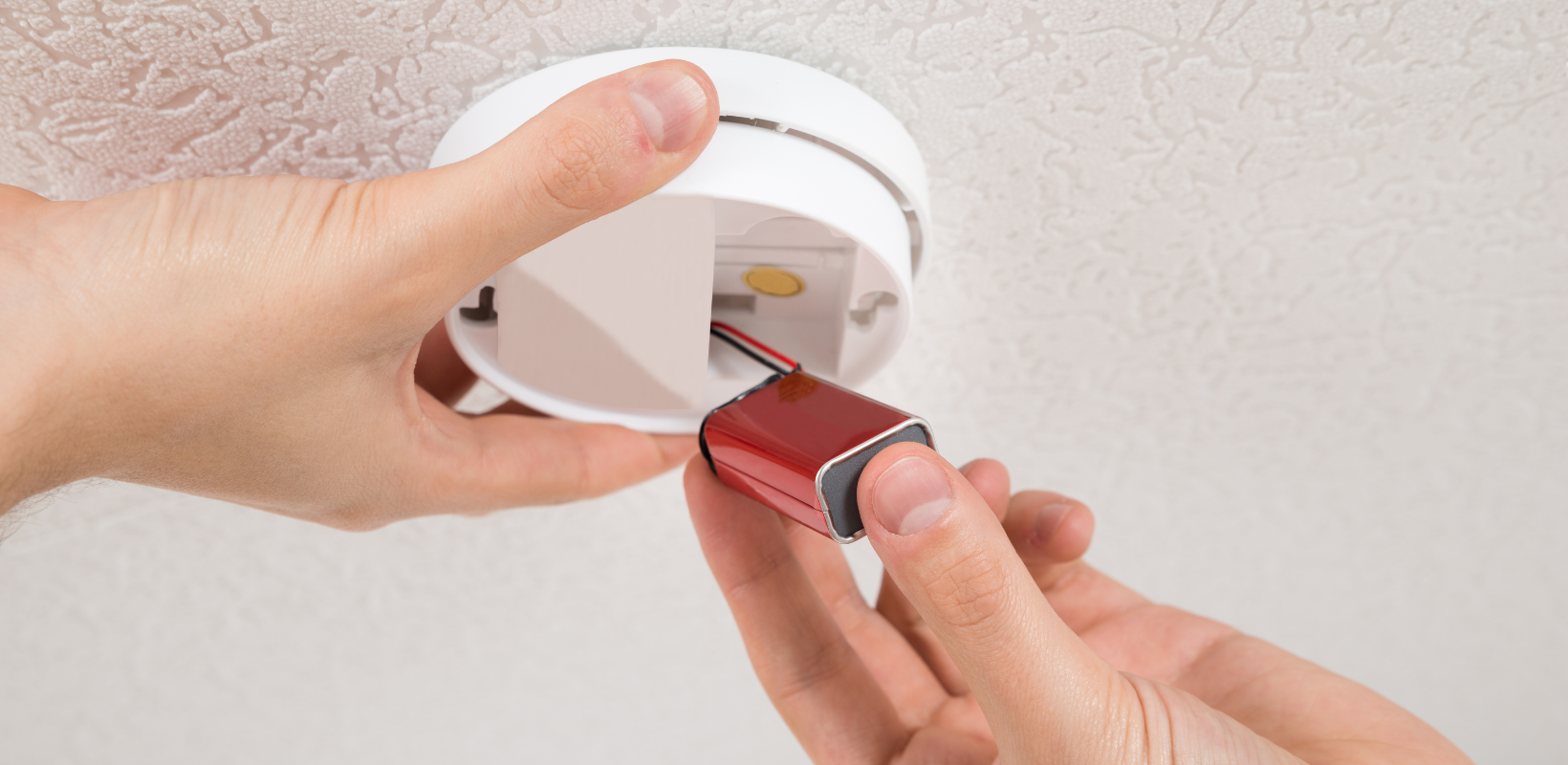
Changing the batteries in your smoke detector is a straightforward process. However, the exact steps may vary depending on the model. Generally, you’ll need a flathead screwdriver, a fresh 9V battery, and a step ladder. Here’s a simple guide to help you get started:

  • Twist open the smoke detector or use the screwdriver to open its cover.
  • If the smoke detector is hard-wired to your house, make sure to flip the circuit breaker before you disconnect it.
  • Detach the old 9V battery from its positive and negative connections.
  • Test the battery using a multimeter
  • Replace the dead 9V battery. Always make sure that the connection to the new battery is good and secure.
  • Use the test button to ensure that the battery powers the smoke detector.
  • Close the smoke detector and reattach it to the wall. If it has a battery drawer, make sure to close it.

Troubleshoot Your Beeping Fire Alarm - HydroForce Cleaning and Restoration

Schedule a Fire Alarm Inspection

Regular fire alarm inspections are essential for ensuring early fire detection and alerting occupants to evacuate safely. For business owners, adhering to the required inspection schedule is especially critical to comply with regulations and maintain a secure environment.

The frequency of fire alarm inspections depends on factors such as local regulations, the type of facility, and the complexity of your system. Below is a general guideline to help you understand the requirements for fire alarm inspections:

  • Do a monthly check: Do a monthly visual inspection to ensure that all the control panels display normal operation and there are no visible signs of damage.
  • Quarterly inspections: Make sure to test the batteries, communication pathways, and annunciators so you can make sure they are functioning properly.
  • Semi-annual inspections: All smoke detectors, alarm signals, and system communication with monitoring services should be verified.
  • Yearly fire alarm inspection: Make sure to conduct a full inspection and functional testing of the whole system that includes the detectors, alarm signals, and backup power sources.

Professional Fire Damage Restoration in Chicago, IL

Properly maintaining your smoke detectors is a critical part of home and workplace safety. By understanding the causes of beeping, learning how to troubleshoot common issues, and keeping up with battery replacements and regular inspections, you can ensure your alarm system functions reliably in the event of a fire. Taking these proactive steps helps protect lives and property by providing early warnings when seconds count.

Fire Damage Restoration - HydroForce Cleaning and Restoration


If you have experienced fire damage in your home or business, our professionals at HydroForce Cleaning and Restoration can help. We provide comprehensive fire damage restoration services for homeowners and businesses in Chicago, IL, and the surrounding areas. Our team ensures every detail is addressed, including replacing damaged smoke detectors to help safeguard your property against future fire risks.

For reliable fire damage restoration in Chicago, IL, and the surrounding areas, or to replace a faulty smoke detector, call us today at (630) 835-0862 to learn more.

Categories
Restoration Tips Sewage Backup water damage

How to Safely Clean a Sewage Backup: Step-by-Step Guide

24/7 EMERGENCY SERVICE RESIDENTIAL & COMMERCIAL SERVICES

Dealing with a sewage backup in your home or business can be both overwhelming and expensive. Beyond the unpleasant odor, it can cause wastewater to back up into drains, potentially leading to significant property damage. Acting quickly and enlisting professional help is essential to prevent the situation from worsening.

In this article, we’ll explore the major risks associated with sewage backups and provide a step-by-step guide for cleaning up the mess. From properly sanitizing affected areas and handling utilities with care to disinfecting clothing, bedding, and food, we’ll cover everything you need to know to restore your space safely and effectively.

What are the Hazards of Sewage Backups?

A sewage backup in your home or business can be extremely hazardous, posing major health risks and potentially causing severe damage. If your basement is flooded, it’s crucial to avoid entering the area until gas and electrical services have been safely shut off. Proper cleanup is essential to prevent illnesses and limit the damage, and children and pets should be kept away from the affected areas.

Step-by-Step Guide for Cleaning Sewage Backups

How to Safely Clean Sewage Backups - HydroForce Cleaning and Restoration

For extensive sewage backups, it’s always best to hire a professional restoration service. However, if the affected area is small and you choose to handle it yourself, here are some steps to help you clean up safely and effectively:

Clean and Sanitize

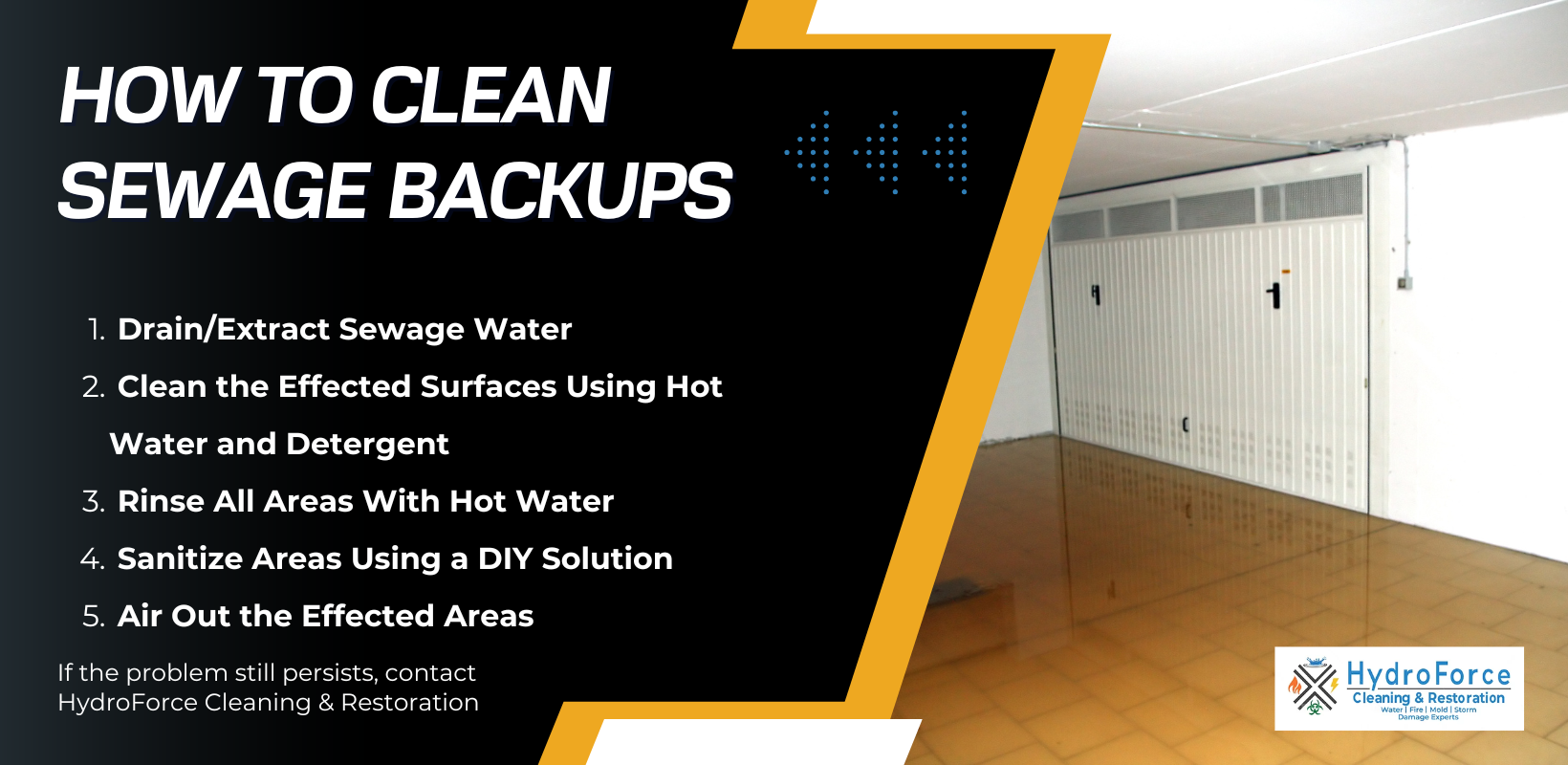
  1. Make sure to drain all sewage water by natural draining or pumping.
  2. All dirt, soil, and debris should be cleaned from surfaces that have touched the flood waters.
  3. All walls, floors, and any surfaces touched by floodwater should be cleaned with hot water and detergent.
  4. Make sure to rinse all areas with hot water.
  5. Walls, floors, and other surfaces should be sanitized by mixing 2½ tablespoons (tbs) of Lysol/Pine Sol per gallon of water or 8 tablespoons (tbs) of laundry bleach in each gallon of water used.
  6. Make sure to air out the area by opening windows and using fans.
  7. You should make sure not to track flood debris and sewage into clean areas.

Utilities

  • Reach out to the utility companies to have gas and electricity shut off.
  • Never touch the fuse box or any cords that are plugged in until the electricity is shut off.
  • If an appliance is under water, do not use it.
  • Never relight any appliances before the gas company has checked them. Also, make sure all pilot lights are on before you relight burners.
  • Never light matches until the gas is shut off as this can cause an explosion if there is a gas leak.

Clothing and Bedding

All clothing, furniture, carpets, toys, and even bedding should be thrown out unless they are thoroughly cleaned and disinfected. If there are objects that are movable, they should be put outdoors so they can be cleaned and dried in the sunlight. Make sure to put any discarded clothing in tightly closed bags until they are picked up for disposal.

After cleaning up, it’s essential to thoroughly wash any clothing and body parts that came into contact with the sewage. Be sure to wash your hands immediately afterward. Anyone involved in sewage cleanup should take extra precautions such as avoiding touching your eyes, nose, or mouth if your hands are contaminated or smoking with soiled fingers, as this can transfer harmful bacteria to your mouth. Once the cleanup is complete, carefully wash your hands and nails using a nail brush and plenty of soap to ensure all traces of sewage are removed.

What is Sewer Water - HydroForce Cleaning and Restoration

Foods

If your food has been contaminated with sewage, consuming it is very dangerous. This is how you should deal with contaminated food:

  • Any food that is contaminated, whether it is boxed or bottled, should be disposed of.
  • Any canned goods and jars can be kept if you thoroughly clean them. To fully clean them you should follow this process:
    • Scrub them with soap and water by using the brush around the rim of the canned jars or tops of cans.
    • They should be submerged in chlorinated water for 15 minutes. Make sure to use 1 ounce of bleach per gallon of water.
    • Make sure to air dry canned jars or cans to prevent rusting.
  • Any food that was stored in the freezer can be kept for up to 2 days after losing power if the freezer is full and 1 day if the freezer is half-full and not opened.
  • If the meat has ice crystals, it may be safely re-frozen. If it is cool but not frozen, you should cook it and then re-freeze it.
  • Any food that was stored in the refrigerator can be kept for 4-6 hours after losing power, however, this depends on the room temperature. Never open the refrigerator unless it is necessary. You can also add ice to the refrigerator to help keep food cold.
  • Any food that has an unusual color, odor or is perishable should be thrown away.
  • Make sure that any food that you are discarding is placed in a tightly closed container until it is picked up for disposal.

Please note: The information given in the above article may differ by state and municipality. You should always reach out to your local health agencies for specific guidelines for your area and for specific suggestions as needed.

Professional Sewage Backup Cleaning in Chicago, IL

Sewer Cleanup Services - HydroForce Cleaning and Restoration

Sewage backups are not only messy and stressful but also pose serious health and safety risks that require immediate and thorough action. By following proper cleanup procedures or hiring a professional restoration company and taking precautions with utilities, personal belongings, and food, you can restore your home or business, minimize long-term damage, and ensure the safety of those within the home or building.

In most cases, sewage backups cause immense damage and create dangerous situations, which means they are best handled by professionals. At HydroForce Cleaning and Restoration, we specialize in providing comprehensive sewage backup cleaning services for homes and businesses in Chicago, IL, and nearby areas. Our skilled technicians are dedicated to cleaning, drying, and fully restoring your property to its original condition while ensuring a safe and healthy environment for your family.

You can call us at (630) 835-0862 for emergency sewage backup cleaning in Chicago, IL, and the surrounding suburbs.

Categories
water restoration

Avoid These 3 Common Plumbing Mistakes

24/7 EMERGENCY SERVICE RESIDENTIAL & COMMERCIAL SERVICES

Plumbing is one of the most important aspects of property ownership. If you’re not careful, a single leak or pipe issue could cause all sorts of physical damage to your home, subsequently costing you and your family thousands of dollars in repairs and new equipment purchases.

Thankfully, there are roughly 555,900 individuals employers as professional plumbers, pipefitters, pipelayers, and steamfitters. These professionals can offer all kinds of plumbing services and save your home from being destroyed by water and piping issues. Though plumbing services aren’t free, reaching out to professionals will end up saving you and your family a significant amount of money in the long run.

It’s important to note, however, that even if you plan on having local plumbers come over to your home and take a look at your home’s plumbing system, you could end up doing additional damage if you’re not careful. Far too many homeowners make simple mistakes when it comes to their plumbing, which end up causing all sorts of expensive and damaging problems.

Avoid These 3 Common Plumbing Mistakes

Here are some common residential plumbing mistakes that homeowners need to be aware of at all costs:

  • Putting the wrong things down your drain — Only pour liquids into your sink and never flush anything other than toilet paper and feces into the toilet. A lot of homeowners mistakenly put all kinds of things into their sink’s drain. Even if you have a garbage disposal, though you can get away with some produce debris, you should still only pour liquids. Here are some items that homeowners mistakenly pour down their drain: coffee grounds, eggshells, cat litter, cotton balls, car fluids, fruit, hair, paper towels, and flushable wipes.
  • Using drain cleaners too often — Drain cleaners are great, but they shouldn’t be overused. When homeowners have a drain blockage, they usually turn to drain cleaners prior to consulting with a plumbing professional. Using them too much, however, can corrode pipes and cause all kinds of additional damage.
  • Not turning the water off — You can’t just leave your water on and quickly swap in a new valve or perform other plumbing tasks. If you do, you’ll have the full water pressure of your system flooding all over the place. Any time you’re performing your plumbing jobs, make sure you turn off the water.

If you’re in need of 24-hour emergency plumbing services or water damage cleanup, don’t wait. Contact Hydroforce Cleaning Systems right away!